Why Non-Combustible Aluminum Decking is Becoming Mandatory for Commercial Balconies?
Non-Combustible Aluminum Decking
The landscape of commercial multi-story construction is undergoing a fundamental regulatory shift. Following catastrophic building fires globally, municipal authorities across the United Kingdom, Europe, and North America have systematically overhauled building fire performance requirements. Timber and traditional Wood-Plastic Composite (WPC) materials, once the standards for exterior infrastructure, are increasingly restricted or banned outright on high-rise structures. For general contractors, developers, and landscape architects, selecting verified Non-Combustible Aluminum Decking is no longer a design preference—it is a legal mandate required to pass stringent site inspections and achieve building sign-off.
Industry Update Notice: To review the complete global distribution layout and international logistics expansion details supporting these high-rise fireproof initiatives, access the official commercial bulletin:Wholesale Aluminum Decking Supplier Extends Fireproof Outdoor Solutions for Global High-Rise Projects via OpenPR.
Regulatory Overhauls in High-Rise Exterior Specifications
Modern fire safety frameworks, such as the UK’s updated Building Regulations and European Union structural fire mandates, strictly dictate the performance of materials utilized on relevant buildings—particularly balconies and raised walkways above specific height thresholds. These frameworks frequently demand materials that achieve an A1 or A2 fire classification under standard testing frameworks. Traditional WPC and structural timber, despite containing flame-retardant chemical additives, fail to meet these non-combustible definitions because their organic polymer binders inevitably support flame spread and generate dense smoke during a thermal event.
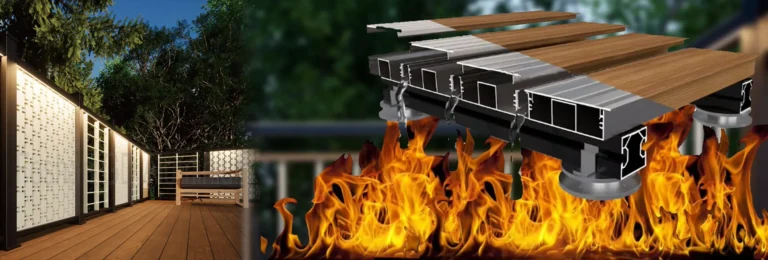
To insulate procurement pipelines from costly regulatory rejections, engineering firms are prioritizing advanced architectural metals. Implementing high-performance fireproof outdoor decking systems protects multi-story developments from localized structural failure during an active fire, preventing external vertical flame propagation up the building envelope.
Materials Science: The 6063-T6 Structural Profile
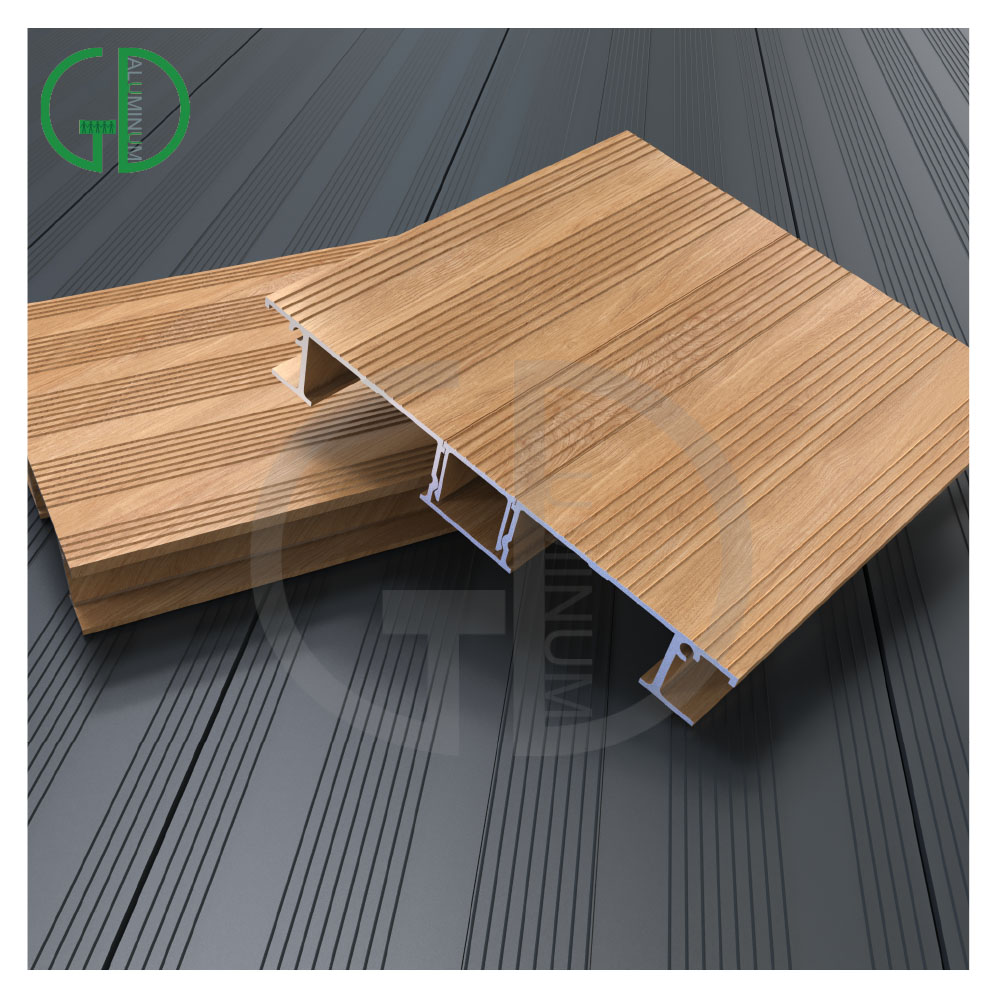
As an established engineering-grade system provider, GD Aluminum addresses these compliance challenges by manufacturing structural commercial balcony decking from premium 6063-T6 structural aluminum alloy. The raw material possesses distinct thermodynamic and mechanical characteristics that ensure structural survivability during high-temperature exposure:
- Elevated Melting Threshold: The engineered 6063-T6 alloy profile exhibits a precise melting point of 660°C. This ensures that under severe localized fire conditions, the decking retains structural positioning far longer than alternative synthetics.
- Class A Performance: The metal functions as an inherent, completely non-combustible decking solution, aligning fully with EN 13501-1 Class A standards. It generates zero smoke, zero toxic gas emissions, and zero flaming droplets.
- Structural Integrity: Beyond fire performance, the 6063-T6 formulation delivers a superior strength-to-weight ratio, allowing long structural spans while resisting mechanical deformation under heavy commercial live loads.
Mitigating Topographical Constraints and Field Labor Expenses
Commercial installations frequently present structural challenges, such as uneven concrete sub-structures, variable drainage slopes, and complex geometric perimeters. Resolving these real-world variances with traditional materials typically demands specialized field carpentry, driving up municipal labor overhead.
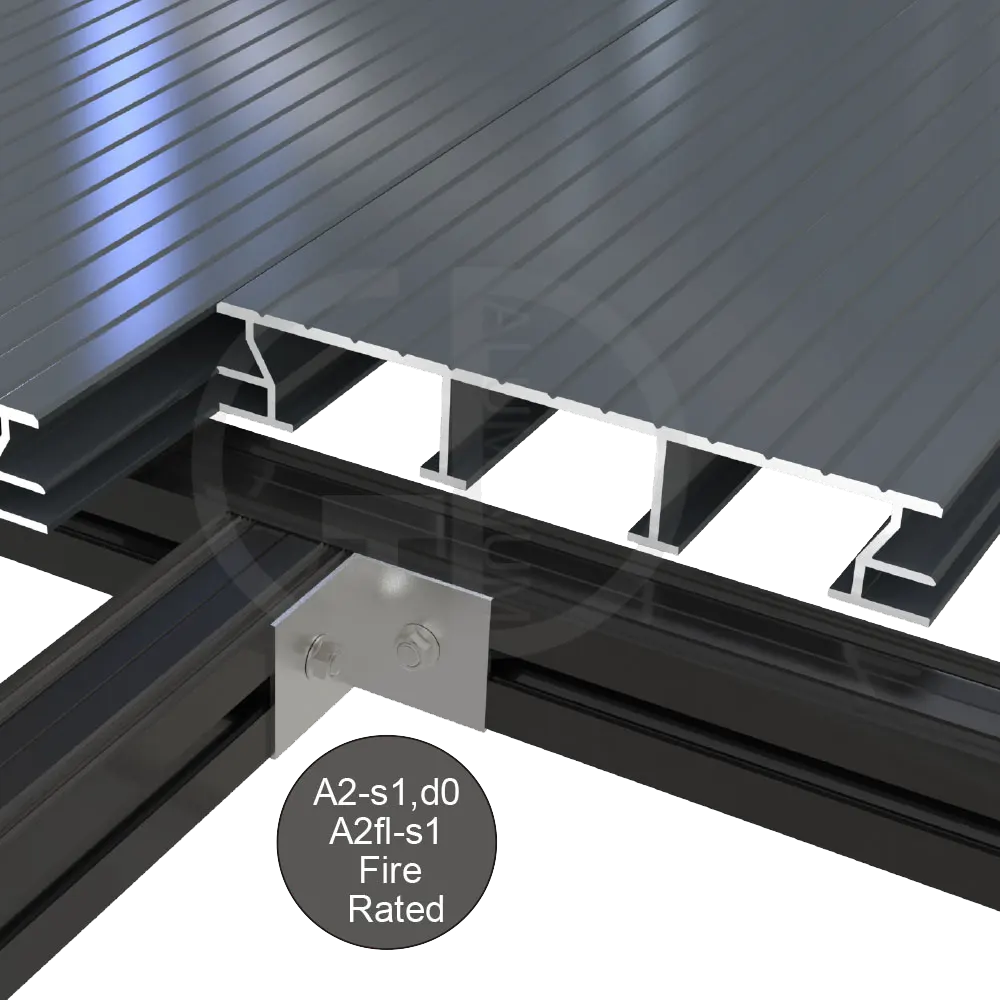
GD Aluminum’s architectural aluminum decking systems feature an engineered interlocking panel design configured for rapid mechanical deployment. When paired with the factory’s proprietary architectural support infrastructure—including the Patented Swivel Post assembly (Patent No: ZL202030484671.6) which permits 0° to 90° multi-axis adaptation—field installation crews can systematically resolve leveling misalignments across complex exterior layouts. Empirical installation data demonstrates that this modular interlocking configuration reduces total onsite labor costs by a minimum of 30% compared to traditional welded iron frames or field-modified timber frameworks.
Long-Term Environmental and Corrosion Metrics
Balconies and public walkways face continuous exposure to atmospheric degradation, including UV radiation, cyclic thermal expansion, and coastal marine environments. While steel corrodible infrastructure requires recurring maintenance coatings, architectural aluminum develops an inherent oxide barrier that prevents deep structural degradation.
To provide long-term protection, GD Aluminum profiles receive a specialized electrostatic polyester powder coating, yielding a dry film thickness of 80–100 microns. Subjected to rigorous validation via ISO 9227 salt spray exposure testing, this architectural coating delivers a corrosion resistance factor 10 times higher than standard structural steel. This advanced finish guarantees a maintenance-free lifecycle of 25+ years without peeling, chalking, or rotting, ensuring long-term value for commercial assets.
Furthermore, this wholesale fence supplier ensures compliance with evolving international trade mandates. All exports comply with European Construction Products Regulations (CPR, EU 305/2011), holding verified EN 1090 and EN 15088 structural certifications alongside official CE and UKCA markings. To assist EU procurement entities managing the Carbon Border Adjustment Mechanism (CBAM), GD Aluminum accompanies every commercial shipment with a verified Green Carbon Certification, eliminating unexpected carbon tax penalties or customs delays at international ports.
Large-Scale Project Fulfillment & Supply Chain Logistics
Managing large-scale commercial bids requires predictable lead times and verified material traceability. GD Aluminum supports global engineering pipelines with scalable manufacturing protocols:
- Flexible Commercial Lead Times: Large-scale commercial project procurement features a transparent, flexible lead time of 35–60 days, aligning with major construction schedules.
- Comprehensive Customization: Commercial buyers can select from more than 200+ RAL international standard colors to match specific architectural branding requirements.
- Pre-Shipment Quality Validation: Every order undergoes a 100% visual quality inspection. Buyers receive a comprehensive photographic and video documentation report detailing precise gauge measurements and surface uniformity prior to container sealing.
- Dedicated Field Engineering Support: Backed by a 1-to-1 material replacement guarantee, the factory provides technical engineering assistance within 72 hours to resolve field installation queries or municipal compliance concerns.
To request digital structural drawings, Intertek engineering data, or a formal product sample kit for an active commercial tender, please submit your architectural drawings directly to the GD Aluminum Project Logistics Office via [email protected].
What are the fireproof regulations for commercial balcony decking in the UK/EU?
Current UK and EU building codes mandate that all materials integrated into the external wall systems or balconies of relevant multi-story structures must meet strict non-combustible criteria. Under the European classification standard EN 13501-1, components must achieve an A1 or A2 rating. Traditional wood-plastic composites (WPC) are restricted or prohibited due to their organic binder content. Verified non-combustible decking engineered from 6063-T6 structural aluminum meets these requirements, enabling compliance with municipal fire safety codes.
Is aluminum decking non-combustible compared to traditional WPC?
Yes, architectural aluminum decking is inherently non-combustible, whereas traditional WPC is classified as a combustible material that can sustain flame spread. WPC materials consist of polymers and wood fibers that ignite under sustained thermal stress. In contrast, architectural-grade 6063-T6 aluminum possesses a precise melting point of 660°C and contains no volatile organic compounds, ensuring it generates zero smoke, zero flame spread, and zero toxic emissions under active fire conditions.
How do I pass building fire safety inspections for outdoor decking projects?
To pass rigorous municipal fire safety inspections for high-density or multi-story commercial balcony decking projects, contractors must supply certified material test reports from independent testing bodies. Specifying an A-class fireproof outdoor decking system manufactured by a certified china fence factory like GD Aluminum ensures compliance. Every consignment is backed by verified CE, UKCA, and EN 1090 documentation, providing inspector-ready engineering data that accelerates project sign-off.