لوائح سياج سلامة حمام السباحة: ما يجب على المحددين والمقاولين التحقق منه
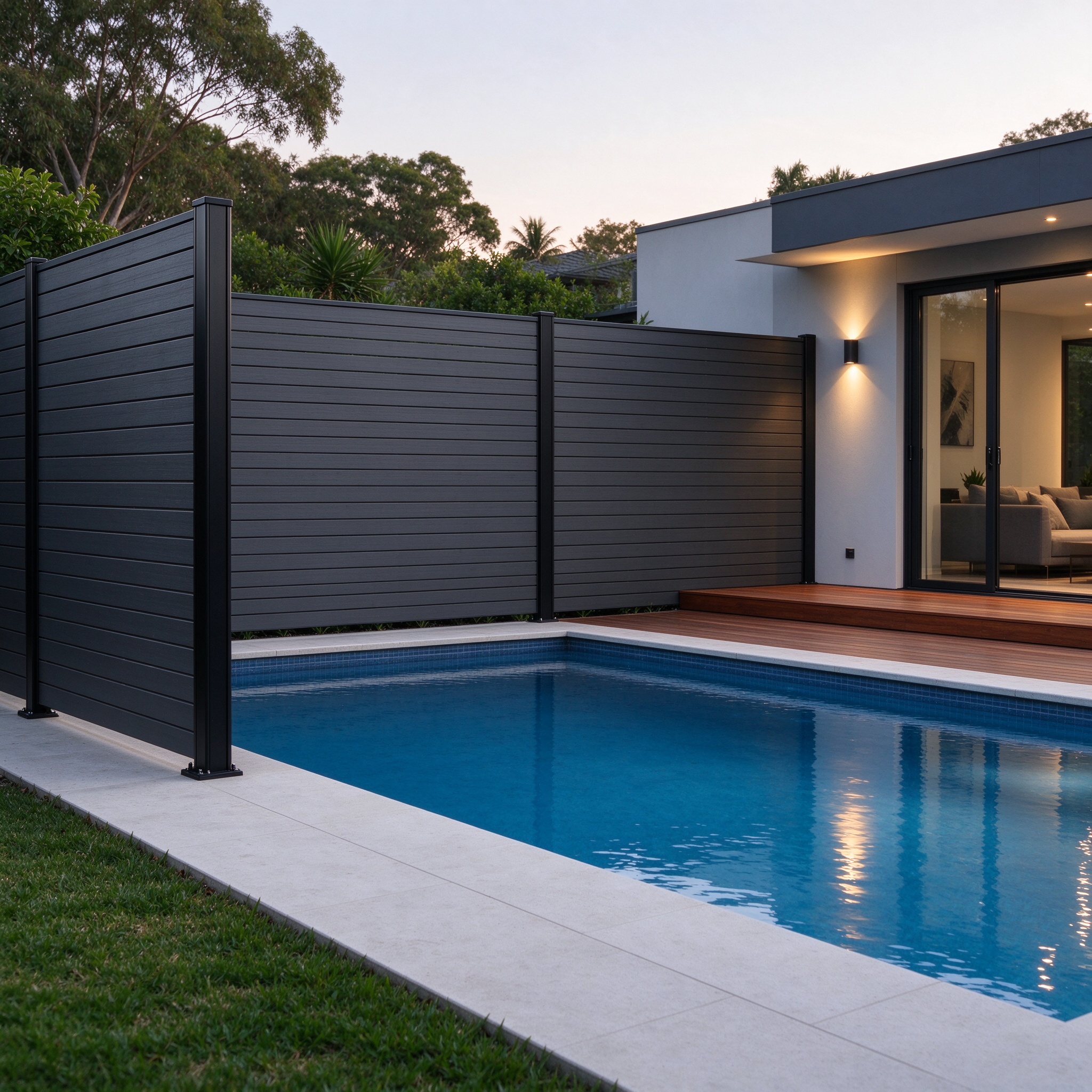
غالبًا ما تُعزى حادثة الغرق في موقع حمام السباحة السكني أو التجاري إلى فشل الحاجز: البوابة التي لم تغلق من تلقاء نفسها, a gap that a child could squeeze through, or a fence height that local codes never allowed in the first place. Pool safety fence regulations exist precisely to remove those failure points — but the rules differ by jurisdiction, and many specifiers inherit outdated assumptions.
This guide summarizes the common engineering requirements behind pool barrier codes in North America and other markets, how aluminum fences meet them, and what to verify on every project before installation.
The Core Safety Principles Behind Every Pool Code
Nearly every pool barrier standard in the world converges on four principles:
1. Minimum height. Typically 48–60 inches (1200–1500 mm) above grade, measured on the outside of the fence.
2. No climbable gaps. Horizontal rails, if present, must be arranged so they cannot serve as ladder rungs; vertical members must prevent a 4-inch (100 مم) sphere from passing through.
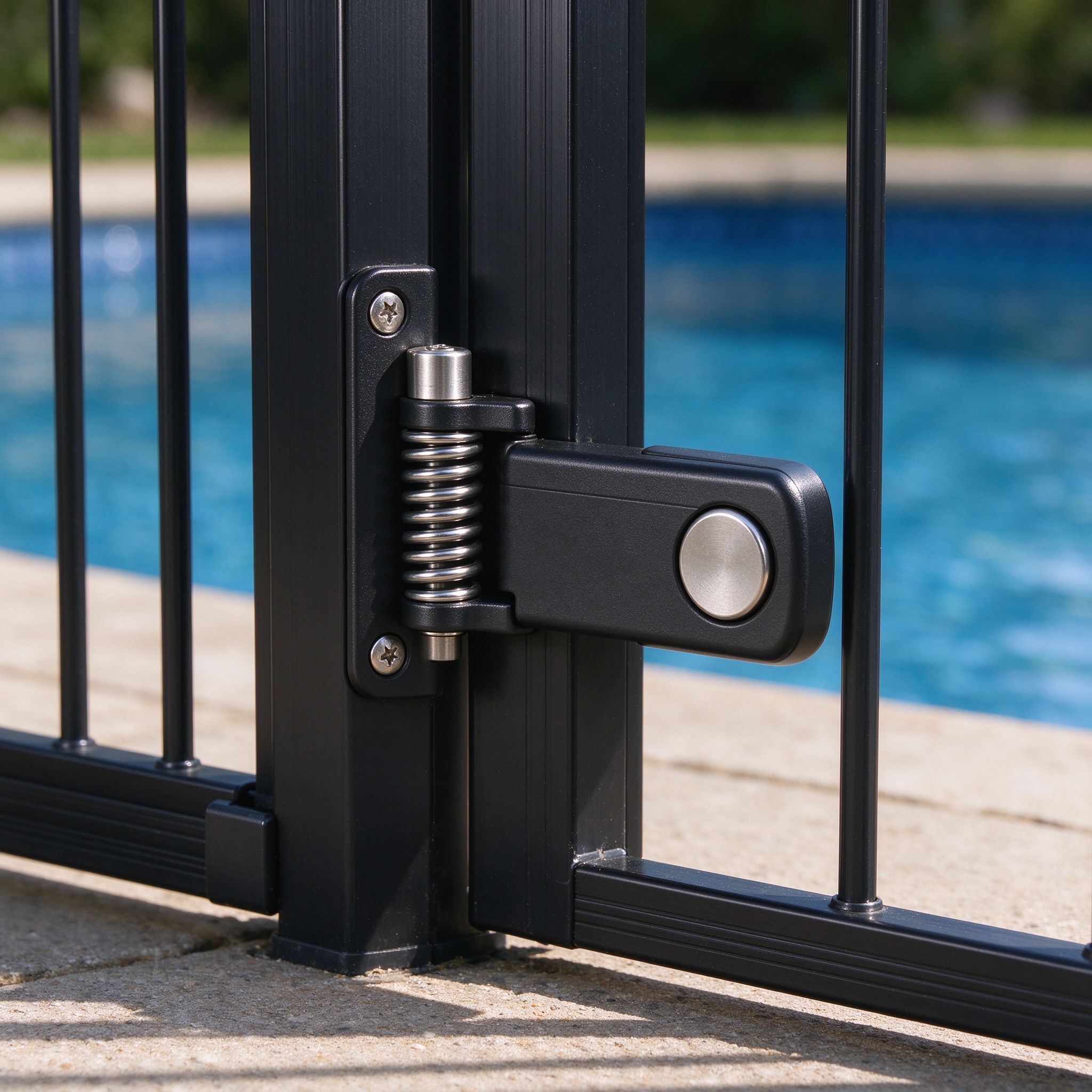
3. Self-closing, بوابات ذاتية الإغلاق. Gates open away from the pool, latch released by a self-closing mechanism and positioned out of child reach (عادة 54 بوصة / 1400 mm above ground).
4. No opening under the fence. Gaps below the bottom rail should not exceed 2 بوصة (50 مم).
The exact numbers are set by the International Swimming Pool and Spa Code (ISPSC), local building codes, and in the United States by state-level amendments and ASTM F2286 for removable mesh barriers. Always confirm the applicable jurisdiction before quoting.
Why Aluminum Fencing Fits Pool Barrier Requirements
Aluminum fencing is a preferred pool barrier for three reasons that map directly to code and to maintenance reality:
– Non-rusting. Pool environments are wet, chlorinated and humid. Powder-coated aluminum does not rust or stain the deck.
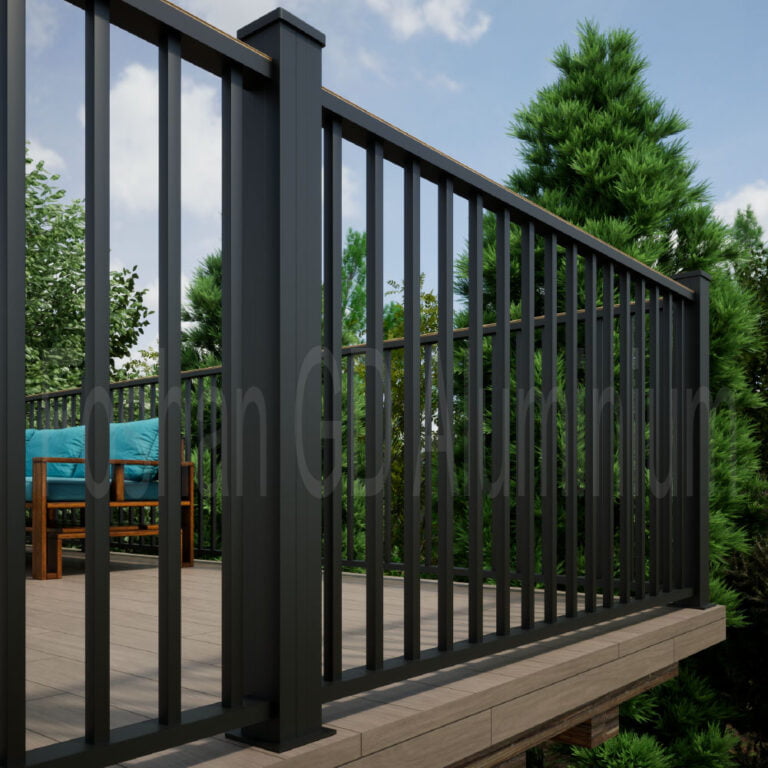
– Rigid and non-climbable. A properly specified aluminum fence with vertical pickets or horizontal slats (installed with horizontal members on the pool side) cannot be scaled by a child.
– Code-ready hardware. Self-closing hinges, magnetic latches and pool-safe gate hardware are designed into the system rather than retrofitted.
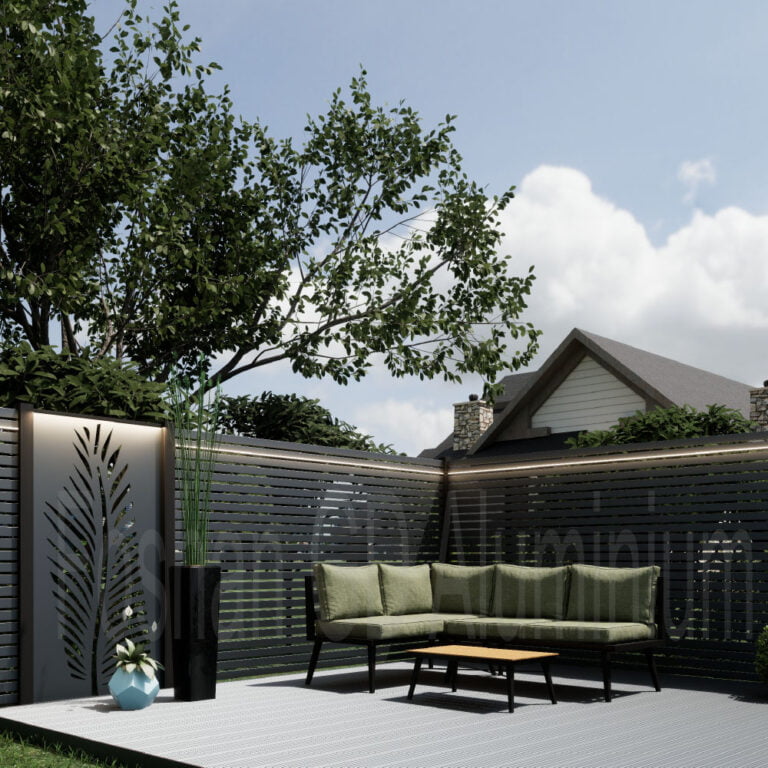
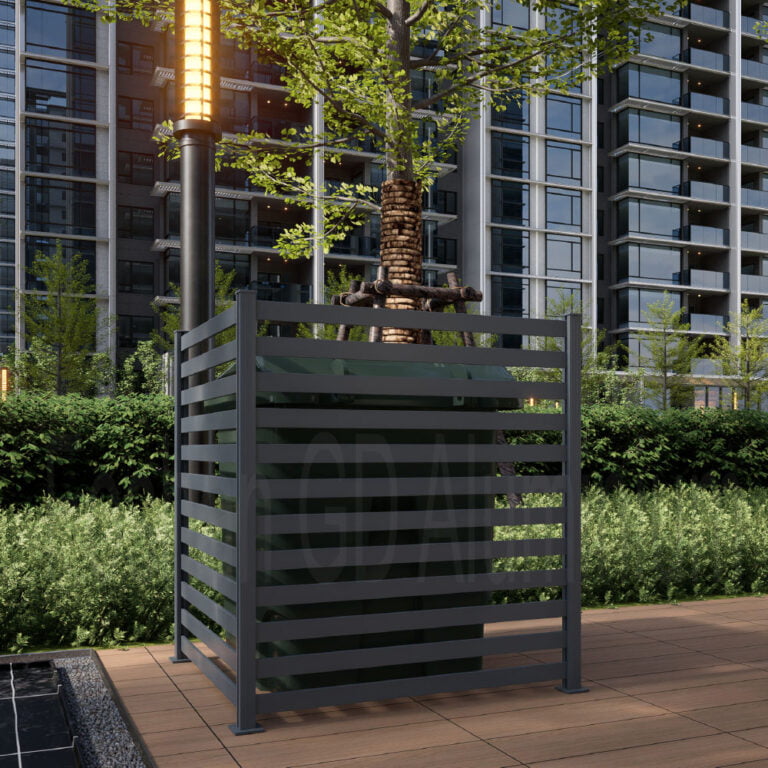
For decorative slat-panel systems, the key decision is rail orientation: horizontal rails must face the pool side, not the street side, so the rails cannot be used as foot holds.
Common Code Clauses Specifiers Missed
Commercial vs Residential Pools
| Clause | Common misreading | Correct reading |
| Height measured from grade | Measured from the deck side | Measured from the *outside* grade; slopes and planters must be addressed |
| Sphere test 4″ | Applies only to pickets | Also applies under gates, around latches and between posts |
| Latch height | “Above the gate” | Usually measured from finished ground, not from gate threshold |
| Gate self-closing | Hinge springs are enough | Must self-latch from any open angle and hold after 10,000+ cycles |
| Mesh barriers | Temporary = exempt | Removable mesh fences must meet ASTM F2286 if marketed as pool barriers |
Commercial projects (community pools, الفنادق, aquatic centers) impose additional requirements:
– Pool permit and barrier plan submitted before construction
– Gates that latch automatically and are electrically monitored (in some jurisdictions)
– Fence withstands public contact and attempted climbing
– Corrosion rating suitable for coastal or chemical-exposure locations
Residential pools have lighter documentation but the same physical barrier logic; inspectors typically request a barrier certificate after installation.
Selecting an Aluminum Pool Fence System
When comparing fence systems for a pool project, evaluate:
1. Post size and embedment. Concrete-embedded or surface-mounted posts rated for the fence height and local wind load.
2. طلاء. مسحوق الطلاء إلى AAMA 2604 level for coastal or chemical-exposure pools; standard AAMA 2603 for inland residential.
3. Gate hardware package. Self-closing hinges, self-latching mechanism, pool-safe magnetic latch, and a key-locking option.
4. Panel infill type. Vertical picket, horizontal slat (pool-side rails), or privacy slat — each changes the sightline and the climbing logic.
5. Wind and flood rating. Coastal pools may require higher wind-load posts.
قائمة مراجعة تدقيق الموردين
1. Does the supplier’s aluminum fence system ship with code-compliant gate hardware pre-assembled?
2. Can they provide drawings showing post embedment, latch height and rail orientation?
3. Is the powder coating grade (أماما 2603 / 2604) appropriate for coastal or chemical exposure?
4. Do they supply both residential and commercial pool barrier packages?
5. Can they supply gate automation that keeps the self-latching logic intact?
6. What is the warranty against rust and coating failure?
7. Do they support custom panel heights to meet the jurisdiction’s 48″/54″/60″ requirement?
8. Can they provide reference installations inspected and approved by local authorities?
التعليمات
س: How tall does a pool safety fence need to be?
أ: Most codes require 48 بوصة (1200 مم) minimum, often 54 بوصة (1400 مم) for residential and 60 بوصة (1500 مم) for commercial. Confirm the exact number with the local building department.
س: Can horizontal-slat aluminum fence be used as a pool barrier?
أ: نعم, provided the horizontal rails face the pool side so they cannot be climbed from the outside, and the panel meets the gap and height requirements.
س: Do pool gates need to self-close?
أ: نعم. Codes require gates that self-close and self-latch from any open position, with the latch mounted out of child reach.
س: Is aluminum better than steel for pool fences?
أ: Aluminum does not rust in wet, chlorinated environments and requires no painting; steel requires hot-dip galvanizing plus coating, and even then can stain the deck at the posts.
اتصل بنا
Specifying a pool barrier? Send us your fence height required, pool type (residential / تجاري), coastal or chemical exposure, and gate count. We will return a code-oriented aluminum fence package with drawings and hardware list. Reach us through the contact page or WhatsApp.