Commercial Security Fencing ROI: How Aluminum Pays Back Faster Than Steel or Chain-Link
Commercial Security Fencing ROI: How Aluminum Pays Back Faster Than Steel or Chain-Link
Security fencing is one of the largest capital outlays a facility makes, yet most buyers choose on first cost and discover the real cost per year only after five years of rust, repainting and replacement. This guide walks through commercial security fencing ROI with a side-by-side look at aluminum, galvanized steel and chain-link, using figures your procurement team can verify before you sign.
Why First Cost Is the Wrong Number in Security Fencing ROI
The purchase price of a fence is the number everyone quotes, but it is the least informative number in the calculation. A complete ROI model has to include installation, Wartung, repair, replacement interval and the cost of a security breach that the fence failed to stop. When those terms are added, a material that costs more per meter today can be the cheaper option across a ten-year operating window.
The mistake we see most often in commercial projects is comparing material prices alone. Galvanized steel and chain-link look attractive on the quote sheet because they carry lower per-meter costs, but their corrosion performance, coating life and maintenance schedules push their lifetime cost above a properly specified aluminum system. The analysis below puts both on the same ten-year timeline.
The Four Cost Drivers That Decide Fencing ROI
Four line items control almost all of the variance between fence systems: initial material cost, installation labor, maintenance and recoating, and service life before replacement. A fifth driver, breach risk, is harder to quantify but matters more than any of the first four for perimeter security.
Initial Material and Installation Cost
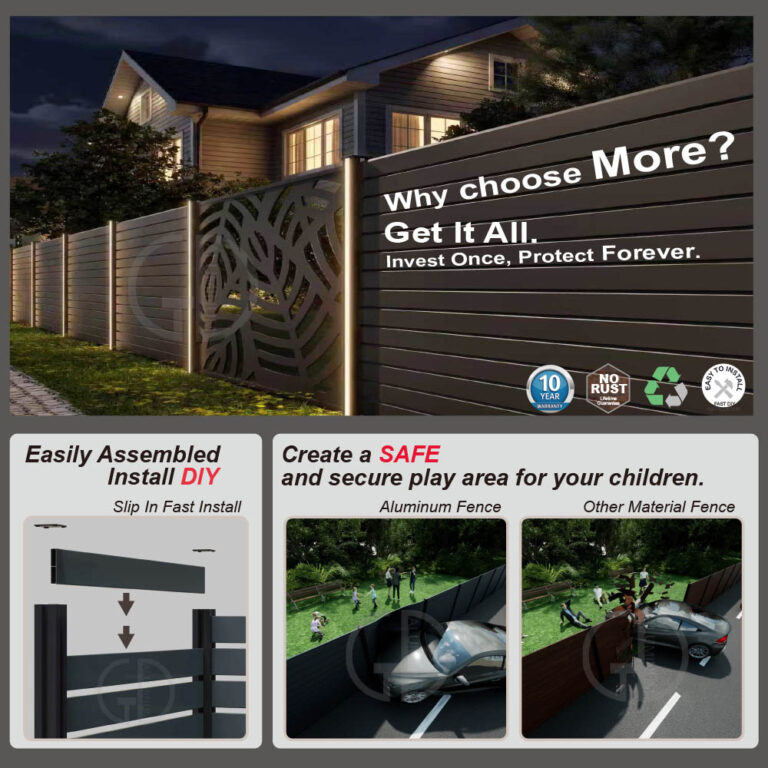
Chain-link remains the cheapest upfront system, followed by galvanized steel, with aluminum carrying a higher initial price per linear meter. The gap narrows once installation is included, because lighter aluminum sections need smaller foundations, fewer fixings and less lifting equipment on site. On projects where ground conditions are poor, the saving in foundation work can offset a large part of the material premium.
Maintenance and Recoating Cost
This is where the ranking reverses. Chain-link requires regular inspection and, in coastal or industrial atmospheres, recoating or section replacement within a few years.
Galvanized steel loses its zinc layer over time and needs repainting cycles that cost labor plus downtime. Powder-coated aluminum, with a finish meeting AAMA 2604 or higher, carries a maintenance profile closer to zero for a decade. For aggressive environments, siehe unsere coastal fencing materials comparison.
Service Life and Replacement Interval
A commercial fence is usually depreciated over ten to fifteen years, but the physical replacement interval varies sharply by material. Poorly maintained chain-link can need sections replaced within five years in aggressive environments. Galvanized steel typically shows coating failure within five to eight years outdoors.
A 6063-T6 aluminum system with a quality powder coat is commonly engineered for twenty years or more, which changes the denominator of every per-year cost calculation. Unser guide to aluminum fence longevity walks through the service-life evidence in more detail.
Breach and Liability Risk
The cheapest fence that fails to stop an intrusion has the worst ROI in the portfolio, because the cost of the incident dwarfs the fence itself. Perimeter fencing is part of a layered security strategy, and the fence’s job is to delay, deter and channel. Material choice affects this: the rigidity of aluminum sections and the anti-climb design of the panel geometry determine how long an intruder needs to breach the line, which is time your response team can use.
Building a Ten-Year ROI Model for Security Fencing
The clean way to compare systems is a ten-year total cost of ownership (Gesamtbetriebskosten) model with these inputs: fence length, material and coating specification, installation cost, annual maintenance cost, expected recoating or repair events, replacement interval and a breach-risk allowance. The output is cost per linear meter per year, which lets you compare quotes that use different materials and different service lives.
A common result in our project work is that an aluminum system at 1.4 Zu 1.8 times the installed cost of chain-link delivers a lower cost per meter per year by year eight, because it carries no recoating events and no section replacement within the model window. The crossover point moves earlier in coastal, high-UV or industrial atmospheres, where competing materials degrade faster.
What the Numbers Look Like in Practice
To make the model concrete, take a 500-meter commercial perimeter. A chain-link installation might quote a lower upfront figure, but recurring maintenance, coating touch-ups and section repairs accumulate year after year, and the fence typically needs major attention before the depreciation schedule ends. A galvanized steel system sits between the two on first cost but inherits the same recoating burden.
An aluminum system built from 6063-T6 sections with a powder coat that passes 2000 hours of salt spray testing carries a higher first-year figure and a much flatter cost curve. The practical result is that the aluminum fence crosses below both alternatives on cumulative cost somewhere between year six and year eight, and keeps widening the gap after that. Every procurement team we quote walks through this model before comparing invoices.
Why the Engineering Specification, Not the Alloy Name, Protects Your ROI
Two fences can both be called aluminum and behave completely differently outdoors. The alloy grade, the temper, the wall thickness of the section, the coating system and the fixings all decide whether the fence performs for twenty years or fails in five. Buying on the word aluminum alone is how ROI promises get broken.
On our own systems we use 6063-T6 alloy as the structural standard because it balances strength, formability and corrosion resistance for perimeter applications, and we subject the finished sections to salt spray testing so the coating claim is verified rather than assumed. That verification is exactly what keeps the ten-year model honest.
Wind rating is part of the same story: a fence that fails in a storm has failed its security function regardless of material price, which is why we test to a 510 N/m² wind load standard through Intertek. The engineering behind wind-rated posts is covered in our wind-rated aluminum fence post guide.
Aligning Fencing Choice with Your Security and Insurance Requirements
For commercial sites, the fence specification often has to satisfy more than the site manager. Insurers look at perimeter security as a factor in premium and coverage, and site security audits score fence height, material rigidity and anti-climb features. Choosing a system that documents its wind rating, coating standard and material grade gives your broker and your security consultant something verifiable to work with.
It is worth asking your insurer and security auditor which fence characteristics they recognize before you tender. A fence that satisfies their checklist from day one avoids retrofits that would otherwise appear mid-term, and retrofits are the most expensive way to buy security.
Checkliste für Lieferantenaudits: 5 Documents That Protect Your Fencing ROI
Before you award a fencing contract, request these five documents. Each one verifies a claim that shows up directly in your ROI model:
- 1. Alloy and temper certificate confirming the section grade (for example 6063-T6), not just a generic aluminum label.
- 2. Salt spray test report showing the coating’s verified hours of corrosion resistance.
- 3. Wind load test certificate with the rated pressure, ideally from an independent body such as Intertek.
- 4. Coating specification confirming compliance with a published standard such as AAMA 2604 oder 2605.
- 5. Reference list of comparable commercial perimeters in service, with contact references.
A supplier who cannot produce these documents is asking you to fund a ten-year cost assumption with a one-line sales sheet. Unserer Erfahrung nach, the audit takes a day and removes most of the risk from the decision.

FAQ: Commercial Security Fencing ROI
Is aluminum fencing worth the higher upfront cost for a commercial site?
For most commercial perimeters, Ja. When maintenance, recoating and replacement are included over a ten-year window, a correctly specified aluminum system typically reaches a lower cumulative cost than chain-link or galvanized steel between year six and year eight, and the gap grows afterward.
How do I calculate the ROI of a security fence?
Build a ten-year total cost of ownership model with material, Installation, annual maintenance, expected recoating or repair events, replacement interval and a breach-risk allowance. Compare cost per linear meter per year rather than first cost per meter.
What is the biggest mistake buyers make when comparing fencing quotes?
Comparing first cost only. The material price difference is usually smaller than the maintenance and replacement cost difference, so the lowest quote is often the most expensive fence over its service life.
What coating standard should commercial aluminum fencing meet?
For outdoor commercial use, specify a building-grade powder coating that meets AAMA 2604 oder AAMA 2605, and ask for the salt spray test report that verifies the finish’s corrosion performance.
Does fence wind rating matter for ROI?
Ja. A fence that fails in a storm has failed its security function and must be replaced early, which destroys the cost model. Confirm the rated wind load and how it was tested before accepting a specification.
CTA
Planning a commercial perimeter and want the ten-year cost comparison before you tender? Send us your site length and environment, and we will send the alloy certificate, salt spray and wind load documentation alongside a quotation you can audit.
Siehe die Aluminum Association’s sustainability overview for independent background on aluminum’s lifecycle performance.