Los mejores fabricantes de vallas de aluminio: 7-Guía de evaluación de factores
Cuando los gerentes de adquisiciones y los especificadores de proyectos buscan el Los mejores fabricantes de vallas de aluminio., No buscan afirmaciones de marketing ni clasificaciones subjetivas.. Buscan un estándar verificable para evaluar a los fabricantes, porque en el abastecimiento B2B, “mejor” no es una opinion. Es un conjunto de criterios mensurables.: clasificaciones de carga de viento certificadas, trazabilidad documentada del material, y registros de cumplimiento que sobreviven a una auditoría aduanera. Buscan datos de ingeniería verificables: Certificaciones de carga de viento que se mantienen en un huracán., trazabilidad del material que pasa la auditoría de un inspector de construcción, y documentación de cumplimiento que pasa por la aduana sin demora. Esta guía evalúa siete factores no negociables que distinguen a los fabricantes con desempeño documentado de aquellos que envían extrusiones de productos básicos..
1. Certificación de carga de viento: Para qué prueban los mejores fabricantes de vallas de aluminio
En 2024, El tifón Yagi tocó tierra con vientos sostenidos superiores a 200 kilómetros por hora. En sus secuelas, Los desarrolladores de proyectos y ajustadores de seguros a lo largo de las zonas costeras desde Florida hasta Queensland reevaluaron una línea de especificación.: clasificación de carga de viento.
El Los mejores fabricantes de vallas de aluminio. invertir en pruebas estructurales de terceros, no en cálculos de ingeniería en papel. GD Aluminium envía sus conjuntos completos de postes y paneles a pruebas certificadas por Intertek en 510 N/m², el equivalente al nivel sostenido de tifón 10 vientos, con cero desprendimiento de componentes y cero deformación estructural. A Nivel de tifón 12 informe de prueba: equivalente a una categoría 4 huracán: actualmente se encuentra en validación final.
Para un comprador mayorista, Esta es la diferencia entre una instalación de 25 años y un reclamo de responsabilidad después de la primera gran tormenta.. Al evaluar proveedores, Solicite el documento de prueba de laboratorio completo que nombre el conjunto específico probado, no un resumen., no es un certificado de cálculo.
Para referencia, Los estándares de prueba de carga de viento de Intertek para componentes de envolvente de edificios se detallan en su documentación de pruebas y certificación arquitectónicas — una verificación independiente que tiene peso tanto para los funcionarios del código de construcción como para los aseguradores.
2. Cumplimiento de la calidad del material y la seguridad contra incendios
La extrusión de aluminio no es una categoría de material única. la aleación, temperamento, y el espesor de la pared determinan si un sistema de cerca cumple con el código de construcción comercial o si se rechaza en la etapa de permiso.
El punto de referencia para cercas estructurales de aluminio es 6063-T6: una aleación de grado aeroespacial tratada térmicamente con una resistencia a la tracción de aproximadamente 215 MPa y un punto de fusión de 660°C. En términos de seguridad contra incendios, esto clasifica el material como No combustible de grado A bajo ASTM E136 y EN 13501-1 — un requisito que ahora se aplica en los proyectos residenciales de gran altura del Reino Unido y la UE tras la reforma regulatoria posterior a Grenfell..
¿Por qué esto es importante para las adquisiciones?? Porque especificar 6063-T6 elimina el riesgo de sustitución de materiales. Aleaciones de menor calidad (6060-T5 o contenido reciclado 6063 sin certificación de temperamento) puede reducir la cotización en 8-12% pero compromete la integridad estructural bajo ciclo térmico. El Los mejores fabricantes de vallas de aluminio. Proporcionar certificados de prueba de fábrica para cada lote..
3. Sistemas de revestimiento y resistencia a la corrosión
Las instalaciones costeras castigan los materiales de vallado. spray de sal, exposición a los rayos ultravioleta, y los ciclos de humedad degradan los recubrimientos deficientes dentro 2-3 años. El resultado: manchas de óxido en el hormigón, sujetadores incautados, y reclamaciones de garantía que desaparecen cuando el proveedor no.
Existe un punto de referencia cuantificable. Recubrimiento en polvo de poliéster aplicado en 80-100 micrones y probado para ISO 9227 Los estándares neutros de niebla salina ofrecen resistencia a la corrosión nominal de 10 veces mayor que el acero galvanizado en condiciones idénticas. Esto se traduce en una vida útil superior 25 años en ambientes marinos, siempre que el pretratamiento incluya conversión de cromato y el polvo provenga de un proveedor certificado. Para especificaciones de grado arquitectónico, cumplimiento de AMAMA 2604 (recubrimientos orgánicos de alto rendimiento) y AMAMA 2605 (Recubrimientos orgánicos de rendimiento superior.) proporciona una capa de verificación adicional: estos estándares requieren 5-10 año Pruebas de exposición en Florida, mucho más allá del simple rocío de sal.
La línea de recubrimiento de GD Aluminium opera con esta especificación. Cada lote se somete a pruebas de adherencia. (rayado según ISO 2409) y pruebas de resistencia al impacto (ISO 6272). Para un desarrollador que especifica cercas para una comunidad de 200 unidades frente al mar, esa documentación no es opcional.
4. Certificaciones que poseen los mejores fabricantes de vallas de aluminio para acceder al mercado de la UE
Para compradores que importan a la Unión Europea, El panorama regulatorio cambió decisivamente en 2023 con completo CBAM (Mecanismo de ajuste de la frontera de carbono) requisitos de presentación de informes y actualización Reglamento de productos de construcción (RCP UE 305/2011) aplicación.
El Los mejores fabricantes de vallas de aluminio. al servicio del mercado de la UE Marcado CE bajo EN 1090 (aluminio estructural) y ES 15088 (productos de cercas de aluminio), más Marcado UKCA para el mercado del Reino Unido. El diferenciador crítico en 2026 es el cumplimiento de CBAM: importadores que compran a fabricantes con Certificación de Carbono Verde eliminar por completo la exposición a los aranceles al carbono. sin eso, Los importadores de la UE se enfrentan a obligaciones de presentación de informes CBAM trimestrales y a un aumento de los costes por tonelada de carbono.
5. Adaptabilidad de ingeniería para terrenos difíciles
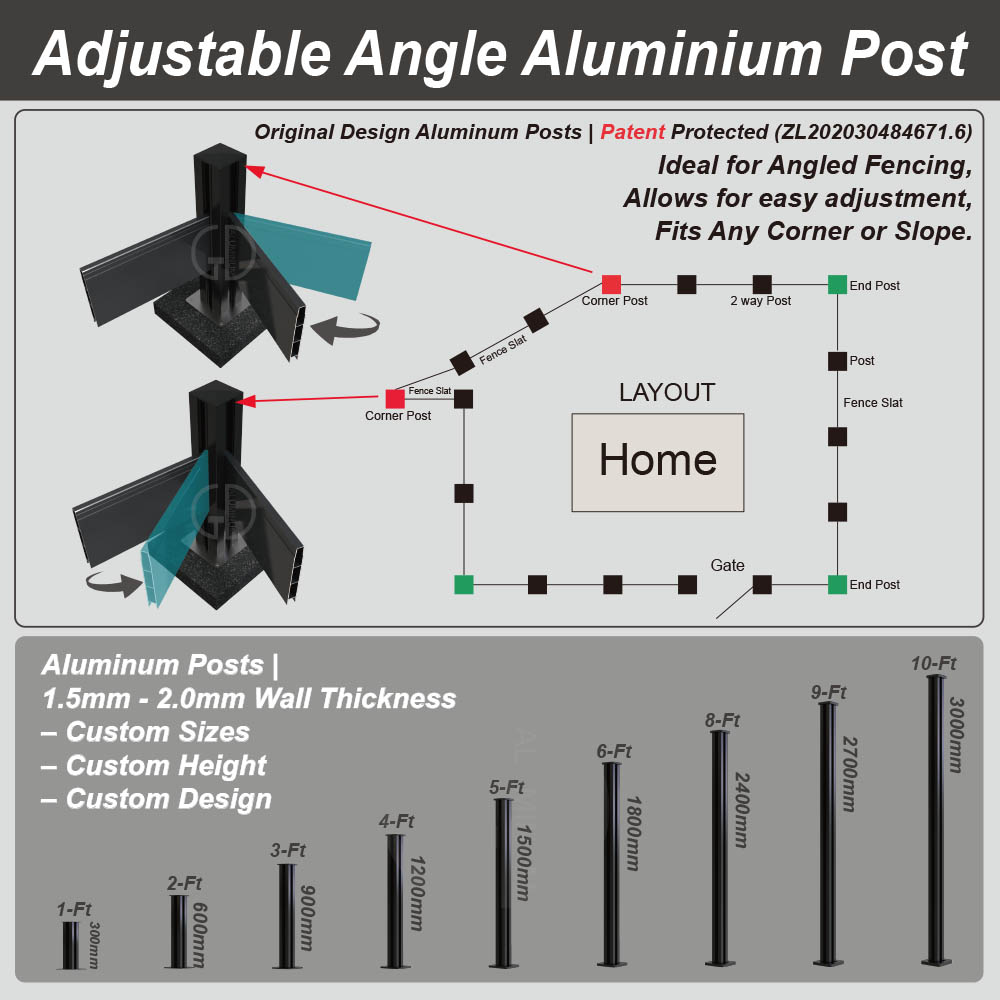
Sitios inclinados, límites curvos, y los diseños irregulares son la norma en proyectos residenciales y comerciales de alto nivel, no la excepción. Los sistemas estándar de cercas de ángulo fijo obligan a los contratistas a realizar costosas fabricaciones en el sitio: corte, soldadura, y soportes personalizados que consumen horas de mano de obra y crean compromisos estéticos.
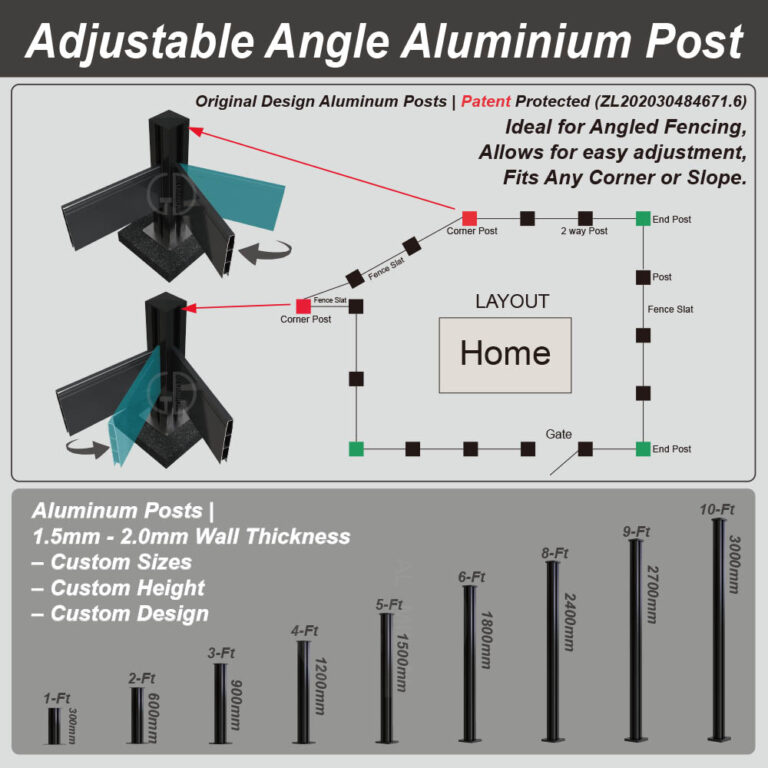
Un sistema de poste giratorio patentado que se ajusta desde 0Rotación de ° a 90° elimina este problema en la etapa de diseño. Diseño de GD Aluminio (Patente China ZL202030484671.6) permite a los instaladores seguir cualquier contorno del terreno sin modificaciones en el campo, reduciendo directamente los costos de mano de obra en el sitio en un estimado 30% o más. Combinado con kits de vallas modulares y sistemas de terrazas entrelazadas., el tiempo total de instalación para un perímetro residencial típico cae de 3-4 días para 1-2 días.
Para un gerente de adquisiciones que compara cotizaciones, El precio unitario del material es sólo la mitad de la ecuación.. El costo de instalación: mano de obra., desperdiciar, reelaboración: es donde Los mejores fabricantes de vallas de aluminio. crear valor medible.
6. Rango de personalización y flexibilidad de producción
Las opciones de color RAL estándar separan a los proveedores de productos básicos de los socios fabricantes. Una oferta de fabricante 200+ Códigos de colores internacionales RAL con coincidencia de polvo documentada indica una línea de recubrimiento interna, no un acabado subcontratado, lo que significa consistencia de color en todos los lotes y existencias de retoque disponibles para los contratistas..
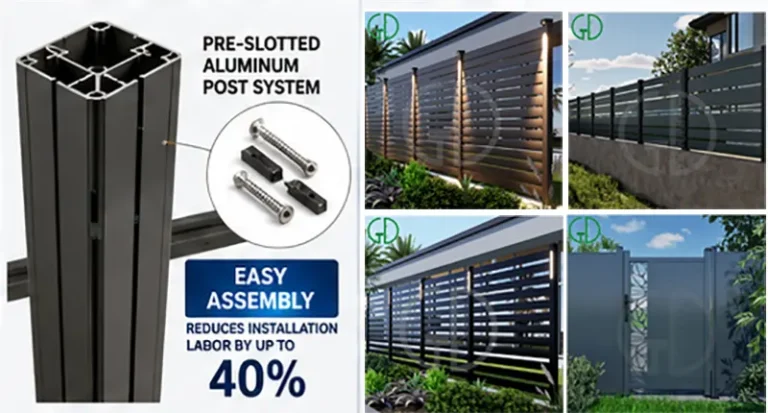
Igualmente importante: la capacidad de manejar pedidos mixtos. Una compra mayorista típica combina artículos en stock de dimensiones estándar con verticales de longitud personalizada y paneles de colores personalizados.. El Los mejores fabricantes de vallas de aluminio. ofrecer productos estándar del inventario junto con producción hecha a pedido con un plazo de entrega transparente de 35-60 días para pedidos de ingeniería a granel, más 1-reemplazo de calidad a 1 servicio con 72-hora respuesta de soporte en el sitio. Además, fabricantes que emplean derribo (kd) El diseño de ensamblaje, donde los componentes se empaquetan planos para el envío en contenedores, puede aumentar la utilización del contenedor al 15-20% en comparación con unidades completamente ensambladas, Reducir directamente el costo de flete por unidad y el costo de descarga del proyecto..
7. Visibilidad de garantía de calidad
El diferenciador final es el menos visible durante el proceso de venta, pero el más importante después de la entrega.: protocolos de aseguramiento de calidad. ISO 9001 la certificación establece el marco, pero la ejecución es lo que importa.
El estándar a buscar es 100% inspección visual previa al envío Con documentación fotográfica y de vídeo proporcionada al comprador antes de la carga del contenedor.. Esta práctica, estándar en las cadenas de suministro aeroespaciales y automotrices, pero poco común en los materiales de construcción, elimina la “lo que llegó versus lo que se ordenó” Disputas que retrasan los plazos de los proyectos y erosionan la confianza.. El Los mejores fabricantes de vallas de aluminio. hacer visible su proceso de control de calidad, no escondido detrás de un certificado en una pared.
Lectura relacionada
- Por qué las terrazas de aluminio no combustibles se están volviendo obligatorias para los balcones comerciales?
- GD Aluminium presenta la certificación Intertek 83 Sistemas de vallas de privacidad resistentes al viento MPH para proyectos de ingeniería costera
- Por qué las terrazas de aluminio resistentes al fuego son esenciales para los balcones modernos de gran altura
Lista de verificación de auditoría de proveedores: 5 Documentos a solicitar antes de firmar una orden de compra
Después de reducir el Los mejores fabricantes de vallas de aluminio. a una lista corta, El último paso es la verificación de la documentación.. Solicitar estos cinco documentos antes de emitir una orden de compra protege su proyecto de la sustitución de materiales, brechas de certificación, y disputas posteriores a la entrega.
- Certificado de prueba de molino (MTC) — Confirma el grado de aleación. (6063-T6), composición química, y propiedades mecánicas de cada lote de producción. Sin MTC, no puede verificar si el aluminio de su cerca es de grado estructural o de contenido reciclado 6060-T5.
- Informe de prueba de carga de viento de terceros — El documento de laboratorio completo. (no es un resumen) nombrar el conjunto específico probado, estándar de prueba (ASTM E330 o equivalente), clasificación de presión (N/m²), y criterios de pasa/falla. GD Aluminium proporciona el informe completo de Intertek para su 510 Sistema de postes y paneles certificado N/m².
- Certificado de prueba de niebla salina (ISO 9227) — Verifica la durabilidad del recubrimiento en condiciones de corrosión acelerada.. Solicitar la duración de la prueba (horas), clasificación de resultados, y mediciones de espesor de recubrimiento (microscopía transversal, lecturas de calibre no magnético).
- CE / Declaración de desempeño de la UKCA (director de fotografía) — Requerido para el despacho de aduanas de la UE y el Reino Unido. La DoP debe hacer referencia a EN 1090-1 (estructural) o ES 15088 (Esgrima), enumerar el organismo notificado, y declarar el uso previsto del producto..
- Muestra de informe de inspección previa al envío — Solicite al fabricante que proporcione una muestra de su formato de informe de inspección estándar., incluyendo fotografías del embalaje, etiquetado, y dimensiones del producto. Esto establece una línea base de calidad documentada antes de cargar el primer contenedor..
Preguntas frecuentes
¿Qué velocidad del viento puede soportar un sistema de valla de aluminio diseñado adecuadamente??
Las clasificaciones de carga de viento se miden en presión. (N/m² o psf), no la velocidad del viento directamente, porque el mismo viento produce diferentes presiones según la categoría de exposición, altura sobre el suelo, y topografía. Un sistema certificado para 510 N/m² – según lo verificado por Intertek para los conjuntos de postes y paneles de GD Aluminium – equivale a un nivel sostenido de tifón 10 vientos (aproximadamente 89-102 km/h sostenido, ráfagas de 130 kilómetros por hora). Para proyectos en zonas propensas a huracanes, un nivel de tifón 12 La calificación es el punto de referencia recomendado..
¿Cómo se comparan las cercas de aluminio con las de acero para instalaciones costeras??
El aluminio con un recubrimiento en polvo de poliéster certificado de 80-100 μm supera al acero galvanizado en aproximadamente 10 veces en resistencia a la corrosión por niebla salina según ISO 9227 pruebas. A diferencia del acero, El aluminio no requiere un mantenimiento sacrificado del recubrimiento: la aleación 6063-T6 es inherentemente resistente a la corrosión., sin recubrimiento que se pueda rayar para exponer un sustrato propenso a la oxidación. Para ambientes marinos dentro 5 km de agua salada, El aluminio es la recomendación estándar en las guías de selección de materiales ASTM y EN..
¿Qué certificaciones debo exigir al importar vallas de aluminio a la Unión Europea??
Tres categorías son esenciales: estructural (Marcado CE según EN 1090-1 para componentes estructurales de aluminio), producto específico (EN 15088 para productos de cercas de aluminio), y ambiental (Certificación de carbono verde que cumple con CBAM para eliminar la responsabilidad arancelaria sobre el carbono). Para el mercado del Reino Unido, agregar Marcado UKCA. Sin estas tres capas de certificación, el envío corre el riesgo de ser detenido en aduana y el importador asume la responsabilidad del costo del carbono a partir de 2027.
¿Se pueden instalar paneles de cerca de aluminio en terrenos inclinados o irregulares sin una fabricación personalizada??
Sí, siempre que el sistema utilice un diseño de poste giratorio. El Los mejores fabricantes de vallas de aluminio. ofrecer postes con ajuste rotacional (0° a 90°), permitiendo que los paneles sigan cualquier contorno del terreno sin cortes ni soldaduras en el campo. Sistema de poste giratorio patentado de GD Aluminium (ZL202030484671.6) está diseñado específicamente para esta aplicación y se ha implementado en sitios residenciales y comerciales inclinados en Europa, Australia, y américa del norte. El diseño del kit modular reduce el tiempo de instalación en sitio en un estimado 30% en comparación con los sistemas de ángulo fijo.