Balustrade en aluminium vs acier: 7 Ingénierie éprouvée & Contrôles des coûts
Balustrade en aluminium vs acier: 7 Ingénierie éprouvée & Contrôles des coûts
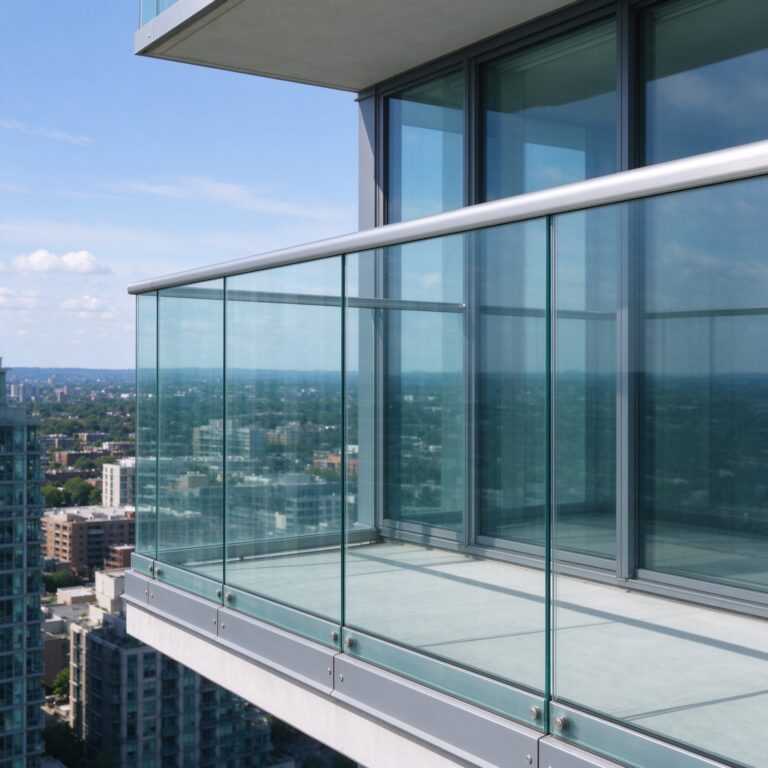
When engineering exterior balustrades for multi-family residential towers, balcons commerciaux, et passerelles institutionnelles, les prescripteurs structurels sont confrontés à une décision matérielle fondamentale: aluminum balustrade vs steel. While structural steel is historically recognized for raw tensile capacity, architectural aluminum has emerged as the premier global standard for exterior perimeters due to its superior strength-to-weight ratio, intrinsic corrosion immunity, and drastically lower lifecycle maintenance cost.
Chez GD Aluminium (佛山市斯特图铝业有限公司), our engineering team manufactures architectural railing and balustrade assemblies extruded from high-strength 6063-Alliage d'aluminium T6. Having supplied structural perimeter solutions across Europe, North America, Australie, and the Middle East, we evaluate how aluminum and steel perform under dynamic wind loads, severe coastal atmospheres, and stringent fire safety regulations. In this technical comparison, we examine the seven critical engineering, installation, and financial criteria that commercial specifiers must weigh before signing specifications.
Why Does Deadload Weight Make Aluminum Balustrades Superior to Steel?
In high-rise construction, balcony cantilevers and post-tensioned concrete slabs are subject to strict structural deadload limits. Mild steel has a density of approximately 7.85 g/cm³, whereas 6063-T6 aluminum alloy has a density of roughly 2.70 g/cm³—making aluminum nearly 65% lighter than structural steel.
This massive weight differential delivers two decisive structural and operational advantages:
- Reduced Slab Edge Moment Forces: Lighter balustrades decrease the continuous torsional moment applied to cantilevered concrete balcony slabs, reducing the required rebar density and slab edge thickening in structural engineering drawings.
- Drastically Lower Crane & Rigging Costs: Prefabricated aluminum balustrade modules can be maneuvered and positioned manually by a two-person installation crew or light material hoists, eliminating heavy tower crane hire hours and accelerating floor-by-floor handover schedules.

How Does Corrosion Resistance Compare Between Aluminum and Steel Balustrades?
Exterior balustrades are continuously exposed to rain, humidité, UV radiation, and airborne chlorides. When steel is exposed to moisture, electrochemical oxidation produces iron oxide (rouiller). Even hot-dip galvanized and painted steel balustrades suffer from cut-edge corrosion, weld joint degradation, and micro-cracking in the paint layer, which eventually causes rust bleed that permanently stains high-value building facades.
En revanche, 6063-T6 aluminum naturally forms a dense, self-healing aluminum oxide passivating layer upon atmospheric contact. GD Aluminum applies architectural-grade AMAMA 2604 et AAMA 2605 electrostatic polyester powder coatings (80–100 μm dry film thickness), verified by independent OIN 9227 2,000-hour neutral salt spray laboratory testing. This ensures zero pitting, peeling, or corrosion blistering across 25+ years in harsh marine coastal and industrial environments. For further insights on protective finishes, read our comparison of revêtement en poudre vs peinture pour portails.
Material Property Comparison: 6063-T6 Aluminum vs Structural Mild Steel
Evaluating aluminum balustrade vs steel requires an objective review of mechanical, physical, and environmental benchmarks:
| Engineering Property | 6063-T6 Architectural Aluminum | Galvanized Mild Steel (Q235 / S275) | Specifier Impact & Selection Advantage |
|---|---|---|---|
| Density / Poids | ~2.70 g/cm³ (Poids léger) | ~7.85 g/cm³ (Lourd) | Aluminum reduces structural slab deadload by ~65% |
| Limite d'élasticité | ≥ 170 MPa | ≥ 235–275 MPa | Steel has higher raw tensile strength, but aluminum extrusions optimize section modulus |
| Corrosion Mechanism | Self-passivating oxide film (Zero rust) | Iron oxidation (Progressive rust bleed) | Aluminum eliminates facade rust staining and expensive repainting |
| Salt Spray Resistance | OIN 9227 ≥ 2,000 Heures (AMAMA 2604/2605) | ASTM B117 500–1,000 Hours (Galvanisé) | Aluminum provides 2× to 4× greater durability in coastal saline air |
| Wind Pressure Rating | Intertek 510 N/m² (Niveau typhon 10) | Engineered per post spacing | Both comply with wind load codes when properly engineered |
| Non-Combustibility | Class A (Melting point ~660°C) | Class A (Melting point ~1,400°C) | Both fully satisfy non-combustible exterior cladding mandates |
| Fabrication Geometry | Complex multi-chamber extruded profiles | Standard rolled tubes and welded plates | Aluminum enables concealed screw bosses, snap-in glass channels, and wire chases |
| 25-Year Maintenance Cost | Near zero (Routine soft-wash cleaning) | Haut (Periodic rust remediation & repeindre) | Aluminum delivers significantly lower 25-year Total Cost of Ownership (Coût total de possession) |
For high-rise tower compliance specifics, consult our detailed analysis on balustrade systems for high-rise.
How Does Extrusion Precision Speed Up On-Site Installation?
Steel balustrades typically require on-site hot work (soudage, coupe, grinding) or rigid mechanical anchor plates that cannot accommodate concrete slab casting tolerances. On-site welding destroys protective zinc and paint coatings, creating instant focal points for accelerated rust corrosion.
Aluminum balustrade systems are produced using precision extrusion dies. This enables engineered features such as internal screw splines, hidden snap-in infill locks, glass clamping channels, and concealed base mounting brackets. GD Aluminum utilizes patented adjustable swivel post fittings (ZL202030484671.6) that accommodate 0° to 90° corner transitions and slab height variations on site, reducing contractor installation labor by more than 30%.

Why Does Aluminum Balustrade Deliver a Superior 25-Year Lifecycle ROI?
While the raw initial material cost of fabricated steel balustrading may appear 10% à 15% lower on an initial procurement tender, a lifecycle financial model reveals that steel is substantially more expensive over a 25-year building lifespan. Steel requires periodic scaffolding access for surface preparation, rust scraping, primer touch-up, and topcoat repainting every 5 à 7 years in urban environments (and every 3 à 5 years in coastal areas).
En revanche, 6063-T6 aluminum with AAMA 2604/2605 architectural powder coating requires only periodic water rinses to maintain aesthetic and structural integrity. En outre, aluminum is 100% recyclable without downcycling, retaining high residual scrap value at the end of the building lifecycle while complying with European CBAM (Mécanisme d’ajustement carbone aux frontières) green building standards. Learn more about long-term financial modeling in our guide to maintenance-free fencing solutions ROI.
Specifier Audit Checklist: Procuring Aluminum Balustrades vs Steel
Before issuing procurement contracts for commercial developments, use this technical audit matrix to verify that the manufacturer meets international building standards:
| Verification Item | Engineering Requirement | Benchmark Standard | Audit Evidence Required |
|---|---|---|---|
| Alloy Composition | 6063-T6 Architectural Grade | DANS 755 / ASTMB221; Yield ≥ 170 MPa | Certificat d'essai en usine (MTC) with heat numbers |
| Wind Pressure Capacity | Dynamic wind load resistance | Intertek 510 N/m² (Niveau typhon 10) | Independent Laboratory Test Report |
| Traitement de surface | Architectural Powder Coating | AMAMA 2604 / AMAMA 2605; OIN 9227 (2,000h) | Coating Thickness & Certificat d'essai au brouillard salin |
| Fire Safety Compliance | Non-combustible exterior rating | Class A / DANS 13501-1 / BS 8579 | Fire Reaction Test Report |
| Anchor & Fixing Hardware | Marine-grade stainless steel fasteners | AISI 316 / A4 Stainless Steel with isolation shims | Material Specification Sheet (Prevents galvanic corrosion) |
| Factory Quality System | OIN 9001 certified manufacturing | Full dimensional and weld batch inspection | Factory Audit Report & 10-Year Written Warranty |
For factory inspection guidelines and quality auditing procedures, review our article on supplier auditing for aluminum manufacturers.
Frequently Asked Questions About Aluminum Balustrade vs Steel
T1: Is an aluminum balustrade strong enough to replace steel in high-rise balconies?
Oui. By optimizing profile wall thickness and internal reinforcement webs, 6063-T6 aluminum balustrades easily satisfy international line load standards (tel que 0.74 kN/m to 1.5 kN/m per building code) and withstand dynamic wind loads up to 510 N/m² (Intertek certified for Typhoon Level 10 conditions).
T2: Will aluminum balustrades corrode or stain concrete building facades?
Non. Contrairement à l'acier, which generates red iron oxide (rouiller) that bleeds onto exterior walls, aluminum creates an invisible, self-passivating oxide barrier. When treated with AAMA 2604/2605 revêtements en poudre, it provides 2,000+ heures d'ISO 9227 salt spray resistance without facade staining.
T3: How do aluminum balustrades comply with high-rise non-combustible fire regulations?
Solid 6063-T6 aluminum alloy has a melting point of approximately 660°C and contains zero combustible polymeric cores, making it compliant with Class A non-combustibility requirements under BS 8579, DANS 13501-1, et le Code international du bâtiment (GRV).
T4: How does aluminum prevent galvanic corrosion when bolted to steel or concrete?
Professional installations utilize grade 316 stainless steel anchors insulated with non-conductive EPDM or nylon isolation washers and gaskets, preventing direct electrical contact between dissimilar metals and eliminating galvanic reaction risks.
Partner with GD Aluminum for Custom Engineered Balustrade Systems
GD Aluminium (佛山市斯特图铝业有限公司) is a premier B2B manufacturer of architectural aluminum balustrades, garde-corps, escrime, and gate systems. We offer custom die extrusion, precision CNC machining, AMAMA 2604/2605 revêtement en poudre, and comprehensive structural calculation support for global commercial and residential projects.
Contact GD Aluminum Engineering Support for Project Inquiries & Quotations:
Direct WhatsApp Consultation: +86 139 2953 0982
Official Website: https://gdaluminium.com/
E-mail: [email protected]