Aluminium jako zrównoważony materiał budowlany: Dlaczego recykling to dopiero początek
Aluminium jako zrównoważony materiał budowlany: Dlaczego recykling to dopiero początek
When architects and facility owners compare sustainable building materials aluminum, it is usually the first name on the list, for one reason: it is endlessly recyclable. That is true, but it is only a small part of the story.
As a sustainable building material, aluminum has to be judged across recycling, service life, weight and maintenance, not on a single claim. This guide explains why aluminum is one of the most defensible choices for building envelopes, fencing and structural elements, and what to verify before you put it in your specification.
The Recycling Story Behind Aluminum
Aluminum is the most recyclable metal in common construction use. Scrap can be remelted and re-alloyed repeatedly without losing its mechanical properties, and recycling uses roughly five percent of the energy required for primary production. The Aluminum Association reports that around 75 percent of all aluminum ever produced is still in use today, which is a durability claim disguised as a recycling statistic.
The practical consequence for building projects is that specifying aluminum gives you a material with a documented end-of-life pathway. When a building is eventually deconstructed, the aluminum sections can be recovered, remelted and returned to the supply chain instead of going to landfill, and that recovery is economically driven rather than mandated.
Beyond Recycling: Where Aluminum’s Sustainability Case Really Lives
Recycling is the headline, but the deeper sustainability argument for aluminum in buildings is its service life. A material that lasts decades without replacement avoids the manufacturing, transport and installation emissions of repeated replacement cycles, and that avoided impact usually outweighs the difference in embodied carbon of the initial product.
Aluminum’s corrosion resistance means it does not need the protective coatings, sealants and replacement cycles that steel and wood demand in outdoor applications. For fencing, taras, balustrades and facades, that translates directly into a lower lifetime environmental footprint, because the building owner is not repeatedly purchasing replacements. The corrosion performance evidence is summarized in our corrosion-resistant aluminum fencing guide.
The Weight Advantage and What It Saves
Aluminum’s low density compared with steel means lighter structural elements, smaller foundations and lower transport emissions. On a fence or balustrade project, the sections are easier to handle on site, and the reduced foundation work cuts concrete use, which is one of the most carbon-intensive materials in any building.
Lighter sections also matter for retrofit projects. Aluminum systems can often be installed over existing structures without the foundation work that a steel system would require, which keeps embodied carbon out of the project and shortens the construction program.
Corrosion Performance: The Maintenance-Free Argument
The sustainability case collapses if a material needs frequent maintenance. Aluminum resists corrosion in a way that steel cannot, which is why it performs in coastal environments, industrial atmospheres and high-humidity regions without the recoating cycles that steel requires. Powder-coated aluminum sections meeting AAMA 2604 or higher carry a finish life measured in decades.
From a whole-of-life perspective, a fence or facade that is cleaned rather than repainted, and inspected rather than repaired, has an operating footprint close to zero. That is the maintenance-free argument, and it is the strongest sustainability claim an outdoor building product can make. The coating science behind that finish is detailed in our AMAMA 2604 coating standards guide.
Using Recycled Content Without Sacrificing Specification
Some buyers assume that recycled aluminum is lower grade and unsuitable for structural sections. In practice, aluminum recycling can produce alloys that match the mechanical properties of primary material, because the remelting process can be controlled to hit a target alloy composition. The recycled content claim should be verified against the mill certificate rather than accepted from a brochure.
What matters for the specifier is the alloy and temper, not the scrap ratio. A fence section made from 6063-T6 alloy performs to a defined standard whether the input was primary or recycled, and asking for the mill certificate confirms both the alloy grade and the sustainability claim.
How Aluminum Supports Green Building Certification
For projects pursuing LEED, BREEAM or other green building certifications, aluminum contributes in several ways: zawartość pochodząca z recyklingu, regional material sourcing, durability that supports the building’s service life, and reduced maintenance materials over the operating period. The documentation trail for these credits is straightforward when the supplier provides alloy certificates, coating standards and test reports. For the certified-buildings angle, zobacz nasze GRS-certified aluminum in sustainable architecture.
The certification value only materializes if the claims are documented. Request the mill certificate, the coating specification and the test report at tender stage, and you have the evidence your assessor needs without a follow-up chase.
What to Verify Before Specifying Aluminum as a Sustainable Material
Not every aluminum product sold as sustainable can support the claim. Three documents decide whether the sustainability story is real: the alloy and temper certificate, the coating standard and its salt spray verification, and the wind load or structural test data. Without these, “recyclable aluminum” is just a label.
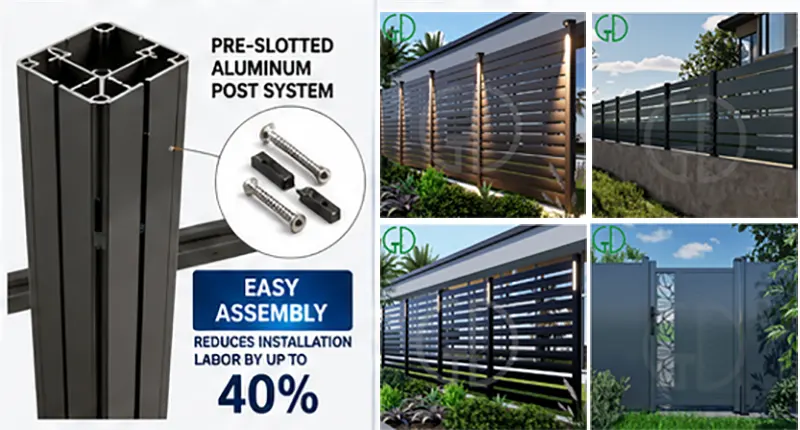
On our side of the industry, GD Aluminum specifies 6063-T6 alloy for perimeter and architectural systems, verifies the powder coating through 2000 hours of salt spray testing, and documents a 510 N/m² wind load rating tested through Intertek. Those are the numbers that let an architect defend the specification in a design review.

Często zadawane pytania: Aluminium jako zrównoważony materiał budowlany
Is aluminum really 100 percent recyclable?
Tak. Aluminum can be remelted and re-alloyed repeatedly without losing mechanical properties, and recycling uses roughly five percent of the energy of primary production. Around 75 percent of all aluminum ever produced is still in use.
Does recycled aluminum have lower strength than primary aluminum?
Not necessarily. The alloy and temper decide the mechanical properties, and recycled material can be controlled to meet the same alloy specification. Verify the mill certificate rather than relying on the scrap ratio.
Why is aluminum considered a sustainable building material beyond recycling?
Its corrosion resistance gives it a very long service life with minimal maintenance, its low weight reduces foundations and transport emissions, and its sections are recoverable at end of life. Avoided replacement cycles are often the largest part of the sustainability case.
What documents should I request to verify an aluminum product’s sustainability claims?
Ask for the alloy and temper certificate, the coating specification with its salt spray test report, and the structural or wind load test data. These verify both the performance and the sustainability story.
How does aluminum fencing contribute to LEED or BREEAM certification?
Through recycled content, trwałość, reduced maintenance materials and potentially regional sourcing. Keep the mill certificate, coating standard and test reports to support the documentation trail.
CTA
Specifying aluminum for a building or perimeter project and need the documentation to defend it? Send us your project requirements and we will provide the alloy certificates, salt spray test reports and wind load data alongside your quotation.
Patrz Aluminum Association’s building and construction overview for independent background on aluminum in construction.