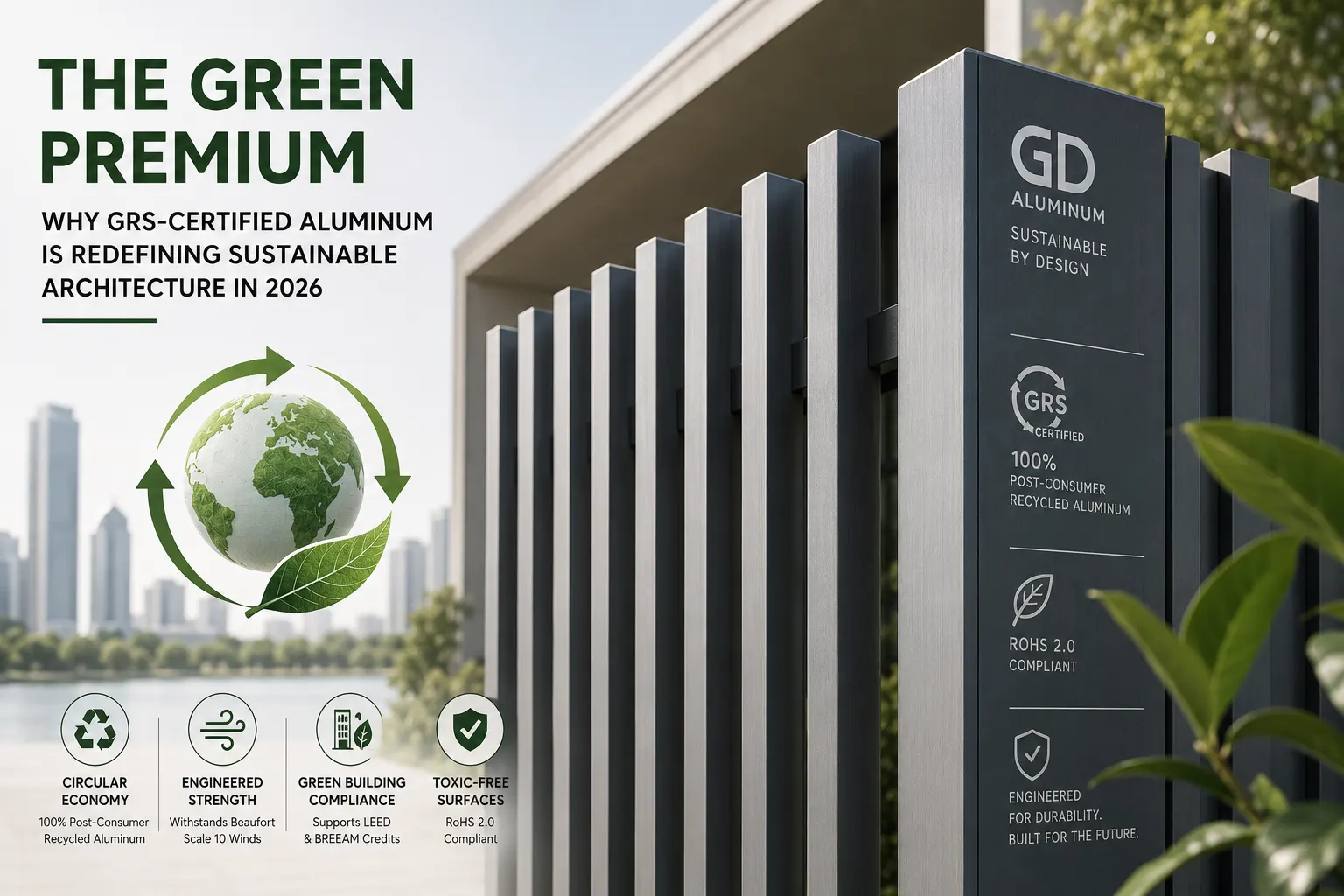
O Prêmio Verde: Por que o alumínio certificado pela GRS está redefinindo a arquitetura sustentável em 2026
Principais conclusões
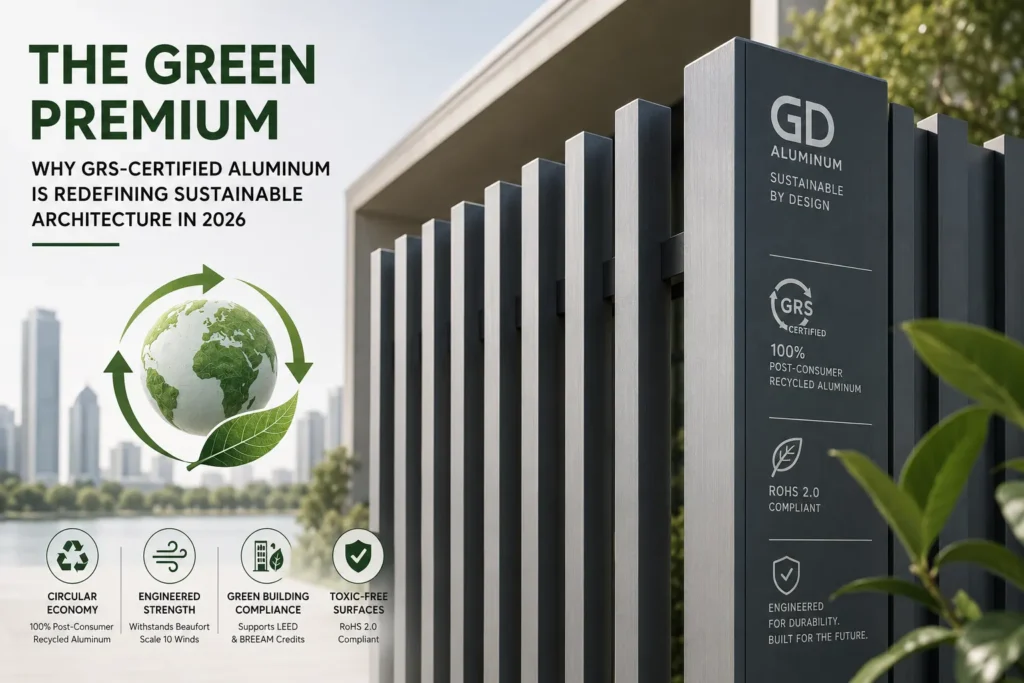
- A Economia Circular: Usos de alumínio com certificação GRS 100% metal reciclado pós-consumo, reduzindo o consumo de energia em até 95% em comparação com a produção de alumínio primário.
- Confiabilidade de Engenharia: Apesar de ser reciclado, A liga 6063-T5 da GD Alumínio mantém uma integridade estrutural que resiste à escala Beaufort 10 cargas de vento.
- Conformidade Estratégica: A utilização de materiais certificados GRS é um caminho direto para garantir LEED e BREEAM “Edifício Verde” créditos para desenvolvedores internacionais.
- Superfícies Livres de Tóxicos: RoHS 2.0 a conformidade garante que os acabamentos arquitetônicos estejam livres de substâncias perigosas como o chumbo (Pb) e Mercúrio (Hg).
A mudança de “Ecológico” para “Circularidade Certificada”
À medida que avançamos 2026, o cenário global da construção passou de vago “verde” reivindicações. Para arquitetos e empreiteiros de nível 1, sustentabilidade é agora uma questão de certificação quantificável. Com o endurecimento dos impostos fronteiriços sobre carbono e a ascensão do ESG (Ambiental, Social, e Governança) mandatos, o material de escolha para fachadas e infraestruturas modernas é Alumínio com certificação GRS.
GD Alumínio está na vanguarda desta transição. Ao integrar 100% alumínio reciclado pós-consumo em nosso processo de extrusão de alta precisão, nós fornecemos ao mundo arquitetônico uma “Desperdício Zero” solução que não compromete o rigor mecânico necessário para segurança em arranha-céus e durabilidade costeira.
O padrão GRS: Mais do que apenas um “Reciclar” Logotipo
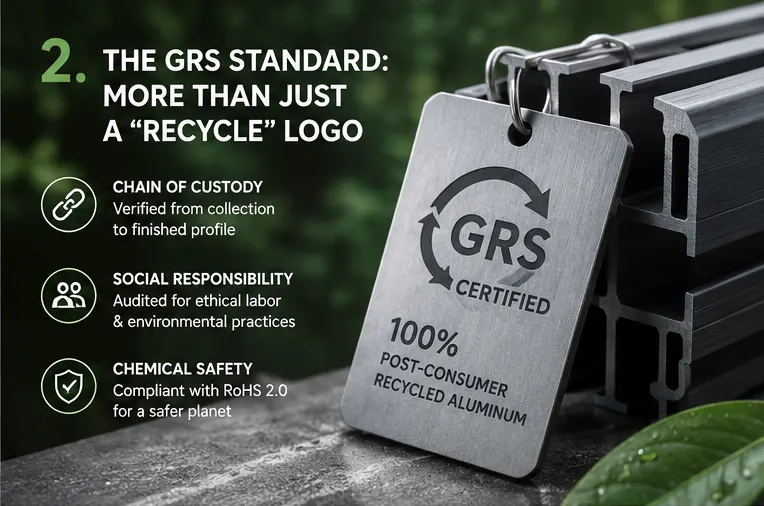
O Padrão Global Reciclado (GRS) é uma certificação internacional holística que rastreia o conteúdo reciclado em todas as etapas da cadeia de fornecimento. Certificação GD Alumínio (Não. BVC-TE-00118533-GRS-2601-50007175-V1.0) confirma o uso de 100% metal pós-consumo reciclado.
Por que o GRS é importante para 2026 Projetos:
- Cadeia de Custódia: Ele garante que o alumínio em sua cerca ou sistema de sarrafo não seja apenas “parcialmente reciclado” mas é verificado desde o ponto de coleta até o perfil finalizado.
- Responsabilidade Social: Ao contrário do fornecimento padrão de alumínio, A auditoria GRS inclui requisitos rígidos de processamento trabalhista e ambiental.
- Segurança Química: Cada lote certificado pela GRS é cruzado com padrões ambientais como RoHS 2.0, garantir a remoção de PBBs, PBDEs, e ftalatos.
Integridade Técnica: O alumínio reciclado pode ser estrutural?
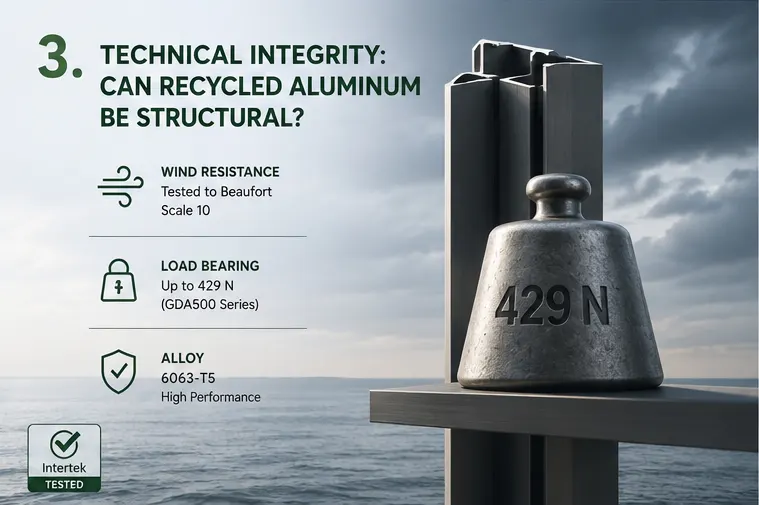
Um equívoco comum é que o metal reciclado perde sua “força.” Nos setores aeroespacial e arquitetônico de alto padrão, esse mito foi desmascarado. Na GD Alumínio, nós utilizamos 6063-Liga T5 derivado de sucata refinada pós-consumo.
Referências de desempenho mecânico (Testado pela Intertek)
Nossos sistemas não são apenas ecológicos; eles são de nível industrial. De acordo com Relatório Intertek 2009230340GZU-001:
- Resistência ao Vento: Nossos sistemas de alumínio permanecem estruturalmente intactos sob Escala Beaufort 10 pressão do vento (simulando condições de tempestade severa).
- Rolamento de carga: Testes de carga horizontal concentrada em nossos postes da série GDA500 mostram uma resistência de até $429\texto{ N}$.
Ao operar 31 linhas de extrusão avançadas, alcançamos uma densidade molecular em nossos perfis reciclados que rivaliza com o alumínio primário, garantindo que um “Sustentável” a cerca é tão segura quanto a tradicional.
Desbloqueando créditos LEED e BREEAM com sistemas reciclados
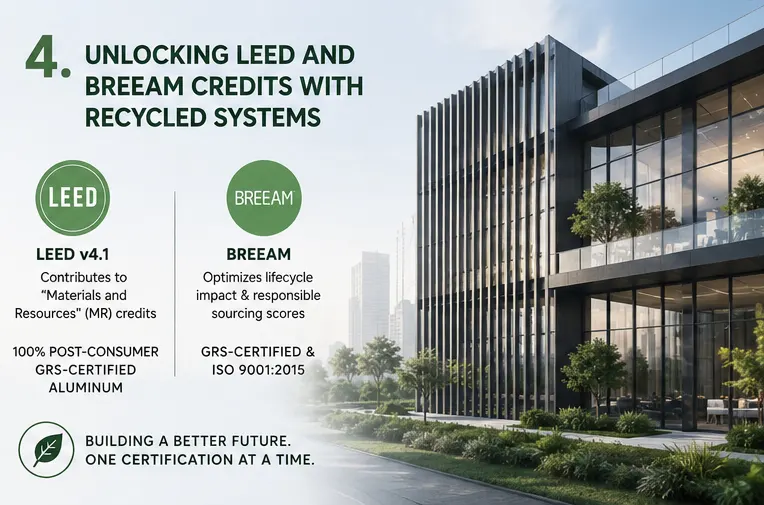
Para desenvolvedores nos EUA, UE, e Médio Oriente, o objetivo muitas vezes é alcançar LEED (Liderança em Energia e Design Ambiental) ou BREEAM certificação. Essas classificações aumentam significativamente o valor de mercado de uma propriedade.
| Certificação | Como o alumínio GD ajuda | Ponto de dados relevante |
| LEED v4.1 | Contribui para “Materiais e Recursos” (SENHOR) créditos via conteúdo reciclado. | 100% GRS pós-consumo |
| BREEAM | Otimiza o impacto do ciclo de vida e as pontuações de fornecimento responsável. | GRS & ISO 9001:2015 |
| Padrão BEM | Garante uma qualidade saudável do ar interior/exterior através de revestimentos com baixo teor de COV. | RoHS 2.0 Conformidade |
Ao especificar GD Alumínio, os empreiteiros podem contornar a complexa documentação das origens das matérias-primas, como nosso Bureau Veritas (BVC) certificados GRS auditados fornecem todas as verificações necessárias para auditores de edifícios verdes.
Tecnologia de superfície: Beleza Sustentável
Um núcleo sustentável requer uma superfície durável. Para evitar a necessidade de substituições frequentes (qual é o último “anti-verde” resultado), nossos perfis são tratados com AkzoNobel ou Tigre revestimentos em pó.
- Longevidade: Esses revestimentos são projetados para durar 20+ anos, mesmo em ambientes com alto UV ou costeiros, reduzindo o “custo oculto do carbono” de manutenção.
- Conformidade: Nosso processo de revestimento é Certificado CE (Certificado: CMGD23110752237) e adere ao Diretiva de Máquinas 2006/42/CE para segurança e qualidade.
A eficiência da escala: 180,000 Toneladas de impacto anual
A sustentabilidade é muitas vezes limitada por estrangulamentos na cadeia de abastecimento. No entanto, A infraestrutura da GD Aluminium – compreendendo um enorme centro de processamento e 31 linhas de extrusão—oferece uma capacidade anual de 180,000 toneladas. Esta escala permite-nos apoiar projectos de infra-estruturas governamentais de grande escala e grandes empreendimentos residenciais sem os atrasos normalmente associados a “nicho” materiais ecológicos.
Perguntas frequentes: Navegando pelo GRS e pelo Alumínio Sustentável
1º trimestre: Qual é a diferença entre “conteúdo reciclado” e “Alumínio reciclado com certificação GRS”?
A1: O conteúdo reciclado padrão é muitas vezes autodeclarado pelos fabricantes. Alumínio com certificação GRS é auditado por terceiros por organizações como Bureau Veritas, garantindo que o metal esteja 100% pós-consumo e processado sob condições éticas de trabalho e ambientais.
2º trimestre: Vai usar 100% alumínio reciclado afeta a classificação de incêndio do meu prédio?
A2: Não. O alumínio é naturalmente incombustível. Os sistemas GD Aluminium mantêm uma Classificação de incêndio Euroclass A1/A2, tornando-os de conformidade obrigatória para varandas e fachadas de arranha-céus de acordo com as mais recentes leis de segurança.
3º trimestre: Como a certificação GRS ajuda na garantia de licitações internacionais?
A3: Muitas licitações governamentais e comerciais em 2026 agora preciso de um Declaração de Sustentabilidade. Fornecendo um certificado GRS (por exemplo, Certificado: BVC-TE-00118533-GRS-2601-50007175-V1.0) serve como prova irrefutável do compromisso do seu projeto com a economia circular.
4º trimestre: O alumínio GRS é mais caro que o alumínio primário??
A4: Embora o processamento de sucata reciclada de alta qualidade exija tecnologia avançada, o “Prêmio Verde” é compensado pelo créditos obtidos em certificações de edifícios verdes e a isenção de certos impostos sobre carbono em regiões como a Europa.
Q5: O alumínio com certificação GRS pode ser usado em ambientes costeiros?
A5: Absolutamente. Quando nosso alumínio 6063-T5 GRS é tratado com Tintas em pó de qualidade costeira da AkzoNobel, fornece a mesma resistência à névoa salina que o alumínio primário, tornando-o ideal para projetos sustentáveis na área marítima.
Conclusão: Projetando para a próxima geração
O futuro da arquitetura não depende apenas da aparência de um edifício, mas de onde vem e para onde vai no final de sua vida. Ao escolher Sistemas certificados GRS da GD Aluminium, você está selecionando um material que já viveu uma vida como produto de consumo e está pronto para servir para outro 30+ anos como um elemento arquitetônico de alto desempenho.
De Resistência ao vento testada pela Intertek para Segurança com certificação RoHS 2.0, fornecemos a base técnica para um mundo que constrói melhor, construindo de forma mais inteligente.