Future of Aluminum Fabrication: 7 Proven Innovations Transforming Construction
Future of Aluminum Fabrication: 7 Proven Innovations Transforming Construction
The global construction and civil infrastructure sectors are undergoing a profound transformation driven by rapid industrialization, stringent environmental directives, and architectural demand for high-performance building envelopes. Within this paradigm shift, 这 future of aluminum fabrication is no longer defined by simple manual cutting and basic welding. Instead, next-generation manufacturing relies on robotic 5-axis CNC machining, low-carbon circular metallurgy, parametric digital twin engineering, and seamless IoT hardware integration.
在GD铝业 (佛山市斯特图铝业有限公司), our manufacturing operations combine high-tensile 6063-T6 aerospace-grade aluminum alloy with precision CNC fabrication. Having engineered architectural perimeter fencing, smart driveway gates, and high-rise balustrades for demanding global markets, we observe firsthand how advanced fabrication technologies minimize lead times, eliminate on-site labor bottlenecks, and elevate structural resilience. In this technical analysis, we examine the seven core engineering innovations shaping the future of architectural aluminum fabrication.
How Does Multi-Axis CNC Automation Redefine Fabrication Tolerances?
Traditional metal fabrication relied on manual chop saws, hand drilling, and manual jig welding—methods prone to human measurement error, uneven weld beads, and thermal distortion. When installing long perimeter fencing runs or high-rise balustrades, minor cumulative millimeter discrepancies lead to severe field misalignment and delayed project handovers.
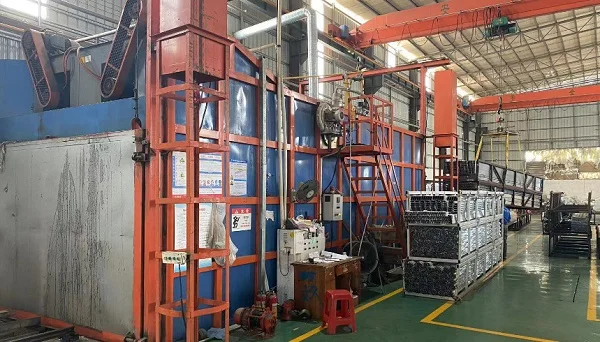
Advanced fabrication facilities now deploy automated 5-axis CNC machining centers integrated with CAD/CAM software. Laser scanning and automated profile milling achieve tolerances within ±0.2毫米 across 6-meter extrusion lengths. Screw ports, snap-lock flutes, hinge mounting slots, and drainage weeps are milled in a single automated clamping cycle, 确保 100% interchangeability of modular components on the construction site.
Technology Matrix: Traditional Fabrication vs Next-Gen Automated Aluminum Fabrication
Specifiers, civil developers, and procurement directors must evaluate how modern fabrication methods outperform legacy workshop operations:
| Fabrication Parameter | Legacy Workshop Fabrication | Next-Gen Automated Fabrication (国电铝业) | 商业的 & Engineering Benefit |
|---|---|---|---|
| Dimensional Tolerance | ±1.5mm to ±3.0毫米 (Manual) | ±0.1mm to ±0.2毫米 (5-Axis CNC Milled) | Eliminates on-site field trimming and assembly delays |
| Joint Connection Method | Exposed field welding & manual grinding | Patented internal mechanical interlocks & CNC splines | Preserves protective coatings and cuts field labor by 30%+ |
| Alloy Carbon Footprint | High-carbon coal smelter primary billets | Recycled billets & CBAM certified green alloy | Reduces embodied carbon by up to 85% for LEED certification |
| 耐腐蚀 | Basic liquid spray paint / thin powder | 阿玛玛 2604/2605 Electrostatic Powder (国际标准化组织 9227 2,000h) | Guarantees 25+ years maintenance-free service in coastal salt air |
| Smart Technology Ready | Unplanned external conduit drilling | Dedicated internal dual-chamber wiring raceways | Enables integrated IoT access control, sensors, and hidden LED lighting |
| Wind Pressure Rating | Estimated from static tables | Intertek certified 510 N/m² (台风级别 10) | Verified dynamic resilience against extreme storm events |
For deeper insights into environmental material selection, explore our analysis on sustainable building materials and aluminum.
Why Is Low-Carbon Green Aluminum (CBAM) Driving Global Architectural Specifications?
The global construction industry accounts for nearly 40% of worldwide carbon emissions. Consequently, international developers and institutional specifiers face aggressive sustainability mandates, such as the European Union’s 碳边界调整机制 (CBAM) and LEED / BREEAM green building rating systems.
The future of aluminum fabrication is inextricably linked with closed-loop recycling. Recycling post-industrial and end-of-life aluminum requires only 5% of the energy needed to smelt primary bauxite ore, preventing 95% of associated greenhouse gas emissions. 此外, aluminum can be recycled infinitely without downcycling or degradation of mechanical properties. GD Aluminum sources hydro-powered, low-carbon billets and provides complete CBAM carbon footprint documentation, allowing Tier-1 contractors to meet strict international environmental benchmarks.
How Does Smart IoT and Electrical Integration Influence Profile Extrusion Design?
Perimeter gates, bollards, and security fencing are rapidly converging with building management systems (BMS) and smart home ecosystems. Modern gates must accommodate license plate recognition (LPR) cameras, biometric terminals, safety light curtains, and wireless mesh networks.
Next-generation aluminum extrusion designs incorporate dedicated internal dual-chamber wiring chases within structural posts and gate rails. This architectural detail completely separates high-voltage motor circuits (110V/230V AC) from low-voltage IoT communication lines (RS-485, Cat6, PoE), shielding sensitive microcontrollers from electromagnetic interference (EMI) and harsh weather exposure. Discover custom integration options in our 定制铝门设计指南.

What Surface Engineering Breakthroughs Guarantee 25+ Year Durability?
In harsh coastal, 工业的, and desert environments, standard painted finishes degrade rapidly under intense ultraviolet (紫外线) radiation, chemical smog, and airborne salt spray. Surface chalking, color fading, and blistering destroy the visual value of commercial architecture.
Modern automated fabrication utilizes multi-stage automated pre-treatment baths (zirconium/titanium nano-conversion coatings) followed by electrostatic application of 阿玛玛 2604 and AAMA 2605 architectural polyester and fluoropolymer powder coatings (80–100 μm dry film thickness). Backed by independent 国际标准化组织 9227 2,000-hour neutral salt spray certification, these advanced coatings deliver over 25 years of maintenance-free performance. Tested under 天祥集团 510 N/m² wind pressure (certified for Typhoon Level 10), our structural systems remain completely unaffected by high-velocity wind-borne sand and sea spray.
Specifier Procurement Audit Checklist: Evaluating Next-Gen Aluminum Fabricators
Before partnering with an aluminum fabrication supplier for major commercial tenders, use this technical audit checklist to verify manufacturing capabilities:
| Verification Domain | Engineering Standard Benchmark | Verification Method | Quality Assurance Value |
|---|---|---|---|
| Extrusion Metallurgy | 6063-T6 Aerospace Grade Aluminum | 工厂测试证书 (MTC) with heat numbers | Ensures tensile strength ≥ 205 MPa and zero profile bowing |
| CNC Machining Precision | Automated 5-axis profile milling (±0.2毫米) | Factory Dimensional Audit & CAD Integration | Guarantees 100% modular fit on site with zero field re-working |
| 风荷载认证 | 510 N/m² (台风级别 10 已认证) | Intertek Laboratory Test Report | Verifies structural resilience under extreme aerodynamic storm forces |
| Surface Coating Quality | 阿玛玛 2604 / 阿玛玛 2605 (国际标准化组织 9227 2,000h) | 盐雾测试证书 & Thickness Gauge | Provides 10-year written warranty against fading and chalking |
| Modular Assembly Tech | Patented 0°–90° Swivel Post (ZL202030484671.6) | Patent Documentation & Assembly Guide | Cuts contractor field installation labor hours by 30% 到 40% |
| 可持续发展 & Carbon | Low-carbon recycled billets (CBAM compliant) | Third-Party Carbon Footprint Report | Meets international green building mandates and avoids carbon tariffs |
For factory auditing methodologies and inspection protocols, read our guide on supplier auditing for aluminum manufacturers.
Frequently Asked Questions About the Future of Aluminum Fabrication
Q1: Why is CNC automated aluminum fabrication superior to traditional field welding?
CNC fabrication achieves micron-level tolerances (±0.2毫米) and pre-drills all assembly connections in the factory. This eliminates on-site hot-work welding, which scorches protective coatings and creates prime initiation sites for corrosion, while reducing field installation labor by over 30%.
Q2: How does green aluminum help contractors comply with EU CBAM regulations?
Low-carbon green aluminum is produced using hydro-electric smelting and recycled billet feedstock, reducing embodied carbon by up to 85%. Comprehensive CBAM carbon declaration documents provide verified carbon accounting, exempting European importers from punitive carbon border tariffs.
第三季度: Can custom aluminum extrusions be engineered for proprietary smart access hardware?
是的. Advanced fabricators like GD Aluminum engineer custom extrusion dies with internal cable conduits, flush intercom faceplate recesses, and hidden photocell chambers tailored to specific smart access control hardware.
第四季度: What is the expected service lifespan of modern architectural aluminum systems?
When extruded from 6063-T6 alloy and finished with AAMA 2604/2605 architectural powder coating, aluminum perimeter systems deliver a maintenance-free service lifespan exceeding 25 到 30 年, retaining high scrap metal residual equity at end-of-life.
Partner with GD Aluminum for Advanced Architectural Fabrication
国电铝业 (佛山市斯特图铝业有限公司) is a premier B2B manufacturer specializing in advanced architectural aluminum fabrication, custom die extrusion, and precision CNC manufacturing for commercial developers, 承包商, and distributors worldwide.
Contact GD Aluminum Engineering Support for Project Inquiries & Quotations:
Direct WhatsApp Consultation: +86 139 2953 0982
Official Website: https://gdaluminium.com/
电子邮件: [email protected]