Diseño de valla de listones verticales: 7 Arquitectónico probado & Reglas de ingeniería
Diseño de valla de listones verticales: 7 Arquitectónico probado & Reglas de ingeniería
Modern architectural perimeters demand a delicate equilibrium between aesthetic minimalism, control de seguridad, y resiliencia aerodinámica. Traditional solid privacy walls act as wind sails that place immense bending loads on posts, while open chain-link or sparse picket fences fail to provide visual privacy. Specifying a vertical slat fence design resolves this architectural challenge by combining directional visual privacy, controlled wind permeability, and high-tensile structural performance.
En GD Aluminio (佛山市斯特图铝业有限公司), we manufacture bespoke vertical slat fencing and screening assemblies extruded from architectural 6063-aleación de aluminio T6. By optimizing slat depth-to-gap ratios, integrating concealed snap-lock fastening channels, and applying certified AAMA 2604 recubrimientos en polvo, our factory provides contractors and architects worldwide with durable, maintenance-free boundary systems. In this engineering guide, we examine the seven fundamental design, aerodynamic, and structural rules required to engineer a flawless vertical slat perimeter.
Why Does Slat Geometry Dictate Privacy and Wind Load Performance?
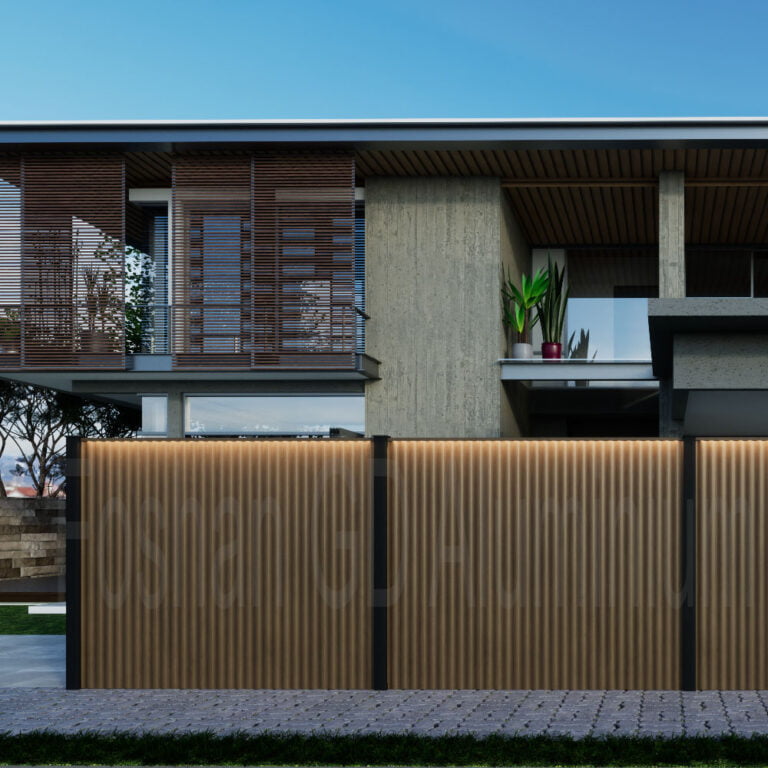
The primary advantage of vertical aluminum slats over horizontal boards is the control of optical perspective and aerodynamic drag. Slat depth (front-to-back profile dimension), slat face width, and spacing gaps determine both the visual cutoff angle and the open-area porosity of the fence panel.
A deeper slat (P.EJ., 65mm to 100mm depth) with narrow spacing creates 100% visual obscurity when viewed from oblique angles (such as pedestrians walking past a residential boundary), while maintaining straight-on light transmission and air circulation. Además, maintaining a 30% a 45% open-air permeability allows heavy wind gusts to pass through the panel, reducing lateral static pressure on foundation footings by up to 50% compared to solid sheet walls.

Engineering Matrix: Slat Dimensions, Spacing, and Privacy Levels
When selecting extruded aluminum slat profiles, specifiers must align cross-sectional dimensions with project requirements:
| Slat Profile Size (Width × Depth) | Standard Spacing Gap | Visual Privacy Level | Wind Permeability Ratio | Recommended Architectural Application |
|---|---|---|---|---|
| 65milímetros × 16milímetros (Standard Batten) | 15mm to 20mm | High Oblique / Medium Direct | ~25% to 30% Abierto | Front yard boundaries, garden gates, and residential perimeters |
| 80milímetros × 20milímetros (Heavy-Duty Slat) | 20mm to 25mm | High Oblique / High Direct | ~20% to 25% Abierto | Multi-family developments, pool enclosures, and commercial screening |
| 100milímetros × 50milímetros (Acoustic Fin Profile) | 30mm to 40mm | Total Oblique / Controlled Light | ~35% to 40% Abierto | Luxury estate perimeters, rooftop screening, and HVAC plant enclosures |
| 40milímetros × 40milímetros (Square Modern Fin) | 20mm to 30mm | Medium Oblique / Open Airy | ~40% to 50% Abierto | Contemporary urban infill, decorative partitioning, and balustrades |
For additional installation techniques on residential boundaries, refer to our comprehensive guía de instalación de vallas de privacidad.
How Does 6063-T6 Aluminum Eliminate Thermal Warping and Sagging?
Timber slats warp, twist, and crack under solar thermal cycles, while plastic composite (WPC) vertical boards suffer from severe creep deflection when exposed to elevated summer temperatures. Steel slats add excessive weight that pulls fixing screws out of horizontal rails over time.
Extruded 6063-T6 aluminum provides superior structural rigidity with a yield strength exceeding 170 MPa. Aluminum’s low coefficient of thermal expansion, combined with GD Aluminum’s internal structural screw flutes, ensures that vertical slats remain laser-straight across decades of intense UV exposure. Además, aluminum is completely impervious to termite infestation, dry rot, and moisture absorption.
How Does Certified Wind Load Engineering Protect Slat Fencing?
Even with permeable spacing, tall vertical slat fencing (1.8m to 2.4m height) generates significant overturning moment forces at the post base during storm conditions. Using thin-gauge posts or improper bracket fixings can cause posts to bend or concrete footings to heave.
GD Aluminum vertical slat systems are backed by independent Intertek laboratory testing up to 510 N/m² (certified for Typhoon Level 10 wind speeds). Our engineering designs utilize high-section-modulus structural posts (75 × 75mm to 100 × 100mm with internal corner reinforcement) that distribute wind shear evenly, ensuring full perimeter structural integrity in exposed coastal and hilltop developments. Review post sizing engineering in our guide on wind-rated aluminum fence posts.

What Surface Finishing Standards Ensure 25+ Year Outdoor Durability?
Vertical slat fences feature numerous exposed edges and narrow drainage gaps where moisture, dirt, and airborne chlorides can accumulate. Inferior liquid paint coatings quickly peel, blister, and corrode at slat cut ends and fixing points.
GD Aluminum treats all extruded aluminum slats and structural posts with architectural-grade AMAMA 2604 and AAMA 2605 polyester powder coatings (80–100 μm dry film thickness). Verified by ISO 9227 2,000-hour neutral salt spray testing, our finishes resist chalking, color fading, and salt air pitting across 25+ years without repainting. Además, our manufacturing processes comply with European CBAM (Mecanismo de ajuste de la frontera de carbono) green carbon standards. Discover the durability differences in our breakdown of powder coating vs painting for gates.
Specifier Audit Checklist: Procuring Vertical Slat Fence Systems
Utilize this technical procurement checklist to audit shop drawings and supplier quotations before signing purchase contracts:
| Audit Category | Engineering Specification Benchmark | Verification Method | Procurement Impact |
|---|---|---|---|
| Aleación & Temperamento | 6063-T6 Extruded Architectural Aluminum | Certificado de prueba de molino (MTC) | Ensures high tensile strength and zero profile warping |
| Wind Pressure Rating | 510 N/m² (Nivel de tifón 10 Certificado) | Intertek Dynamic Pressure Test Report | Prevents post deflection and storm damage liability |
| Surface Coating | AMAMA 2604 / AMAMA 2605 (ISO 9227 2,000h) | Coating Thickness Gauge & Salt Spray Test | Guarantees 10+ year color retention without repainting |
| Fixing Mechanism | Concealed screw channel / Snap-in cover strip | Shop Drawing Review | Eliminates visible screw heads and cuts on-site labor |
| Corner & Rake Adaptability | Patented 0°–90° Swivel Post (ZL202030484671.6) | Patent Verification & Installation Manual | Accommodates stepped terrain and angled property lines |
| Environmental Standards | 100% Recyclable Green Aluminum (CBAM compliant) | Factory Carbon Audit Report | Meets global green building and sustainability mandates |
For factory auditing protocols and QA verification, explore our guide on supplier auditing for aluminum manufacturers.
Frequently Asked Questions About Vertical Slat Fence Design
Q1: Why choose a vertical slat fence over a horizontal slat fence?
Vertical slat designs offer superior aerodynamic wind shedding, resist climbing attempts by eliminating horizontal foothold steps, and create enhanced optical privacy when viewed at angles from streets or sidewalks. In addition, vertical profiles allow rainwater to drain freely, minimizing dirt streaking.
Q2: How do vertical aluminum slats handle sloped or stepped ground?
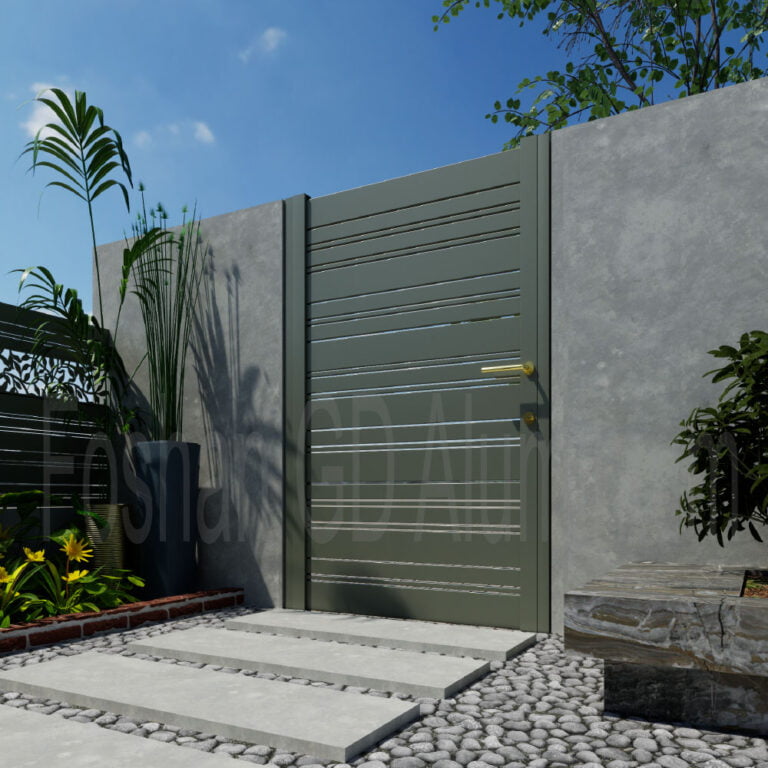
GD Aluminum utilizes a patented 0°–90° adjustable swivel post system (ZL202030484671.6) and modular raking brackets that allow vertical slats to follow natural terrain contours or step down retaining walls without custom on-site welding or cutting.
Q3: Can vertical slat fencing be integrated with automated driveway and pedestrian gates?
Sí. GD Aluminum fabricates matching automated swing gates, cantilever sliding gates, and pedestrian access doors utilizing the identical vertical slat profile and spacing, ensuring a seamless perimeter visual aesthetic.
Q4: What maintenance is required for powder-coated aluminum slat fences?
Because 6063-T6 aluminum with AAMA 2604 coating does not rust, putrefacción, or absorb moisture, maintenance is limited to periodic low-pressure water rinsing with mild detergent every 6 a 12 months to remove surface dust.
Partner with GD Aluminum for Custom Vertical Slat Fencing Solutions
Aluminio GD (佛山市斯特图铝业有限公司) is a premier B2B manufacturer specializing in custom architectural aluminum fencing, puertas, balaustradas, and screening systems. We provide comprehensive CAD takeoff services, bespoke profile extrusion, precision CNC machining, and certified export packaging for projects worldwide.
Request Technical Support & Factory Direct Quotations:
Direct WhatsApp Consultation: +86 139 2953 0982
Official Website: https://gdaluminium.com/
Correo electrónico: [email protected]