तटीय क्षेत्र की बाड़ लगाने की सामग्री: साल्ट एयर परियोजनाओं के लिए एक चयन और जीवनचक्र गाइड
तटीय क्षेत्र की बाड़ लगाने की सामग्री: साल्ट एयर परियोजनाओं के लिए एक चयन और जीवनचक्र गाइड
If you have watched a new steel fence rust at the welds within two years of a beachfront install, you already know the problem is not the installer. It is the material.
Salt air is a constant corrosion load, and most fences are specified without checking whether they can carry it. This guide shows how we select coastal area fencing materials at GD Aluminum, what to verify before ordering, and what maintenance really costs over the life of a project.
Why Do Coastal Fences Fail Faster Than Anywhere Else?
Salt air accelerates every corrosion mechanism on a fence. Chloride particles settle on surfaces, dissolve in humidity, and attack bare metal at cut edges, welds, and fasteners.
Wood fails first at the ground line, where salt-laden moisture collects and rots the post. Galvanized steel fails first where the zinc layer is broken: welds, drilled holes, and scratched panels.
In our production practice, most coastal failures we hear about are coating or connection failures, not alloy failures. That is why selection starts with the finish and the hardware, not with the metal alone.
The failure sequence is predictable: coating breakdown exposes bare metal, corrosion starts at that break, and the fence ages quickly from there. Specify the first step correctly and the rest follows.
Which Coastal Area Fencing Materials Should You Shortlist?
Four material families dominate coastal fencing quotes. Here is how they behave in salt air, and where each one belongs.
| सामग्री | Salt air behavior | Maintenance cycle | Best fit |
|---|---|---|---|
| Galvanized steel | Rust at welds and cut edges | Coating touch-up every 2-4 साल | Budget-led inland sites |
| Wood / timber | Rot at ground line, मुड़ने | Stain or replace posts every 3-5 साल | Inland residential |
| Vinyl / PVC | UV fading, embrittlement | Cleaning; panel replacement | Low-traffic residential |
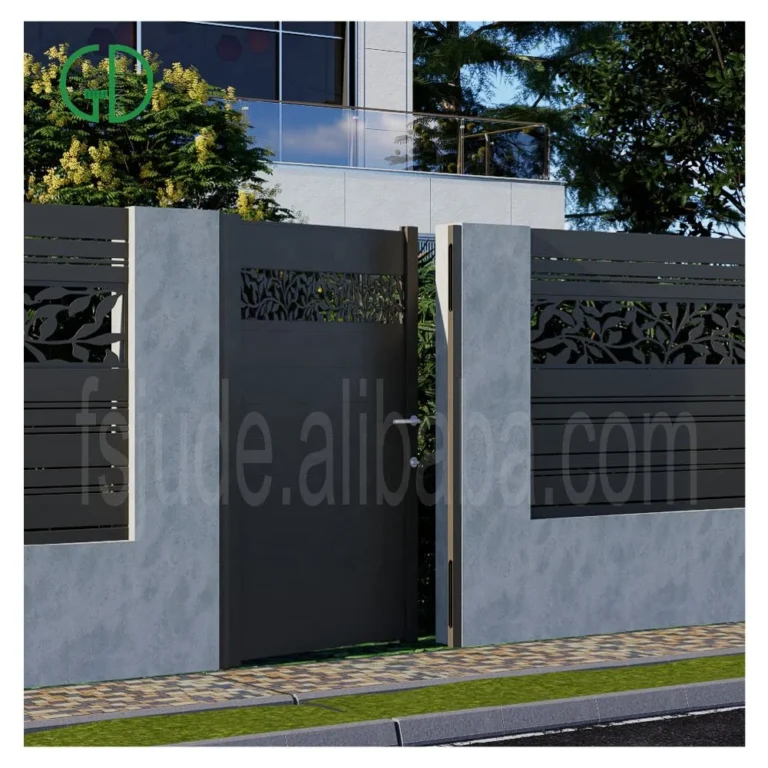
| अल्युमीनियम (6063-टी6) | Oxide layer plus powder coating resist salt | Occasional rinse in heavy salt zones | Coastal, व्यावसायिक, high wind |
For coastal work, we shortlist materials whose corrosion resistance is proven by test data, not by brochure language. Our side-by-side aluminum vs steel and wood comparison digs into the trade-offs material by material.
How Do You Verify a Material Is Actually Coastal-Grade?
Three documents separate coastal-grade material from coastal-looking material: the alloy certificate, the coating specification, and the hardware specification. A supplier that cannot produce all three is selling appearance, not verified performance.
मिश्र धातु. 6063-T6 aluminum combines strength with corrosion resistance, and the temper is verifiable on the mill test certificate. It is the same alloy family used in structural curtain walling.
कलई करना. We finish with architectural powder coating to AAMA 2604/2605. In our 2,000-hour neutral salt spray test per आईएसओ 9227, the coating shows no breakthrough corrosion, and that data backs our 10-year coating warranty.
Hardware. Concealed stainless or matching-alloy fasteners prevent galvanic corrosion where panels meet posts. Exposed bare steel fasteners will compromise an aluminum fence from the inside out.
Ask which fasteners the panels use and whether cut edges are sealed on site. That single question filters out most low-cost coastal quotes.
हमारा corrosion resistant aluminum fencing guide explains how each test translates into real coastal performance. Use it to build the RFQ checklist for your next project.
When Does a Coastal Fence Need a Certified Wind Load Rating?
Coastal sites are wind sites. A fence panel is a vertical sail, and open waterfront plots, high-rise balconies, and typhoon regions all demand more than a sturdy-looking frame.
हमारे बाड़ और गेट सिस्टम इंटरटेक द्वारा प्रमाणित हैं 510 N/m² under dynamic simulation. The certificate covers the panel and post combination, which is the part many suppliers do not test.
The rating drives post spacing and section size. When we engineer a system to 510 एन/एम², we size the posts and frames for that pressure, so the certificate is the envelope the whole system is built to.
Require the rating when the site is exposed coastline, above ground level, or a code-governed commercial project. Ask for the third-party report and check the pressure in N/m² before you compare quotes.
For the engineering background, हमारा देखें पवन रेटेड एल्यूमीनियम बाड़ पोस्ट मानक. The post is where wind and corrosion loads meet, so it deserves its own review.
What Does a Coastal Fence Cost Over Its Lifecycle?
Purchase price is only the first line of the ledger. In salt air, galvanized steel needs coating renewal every 2-4 साल, and wood needs staining plus post replacement within five years.
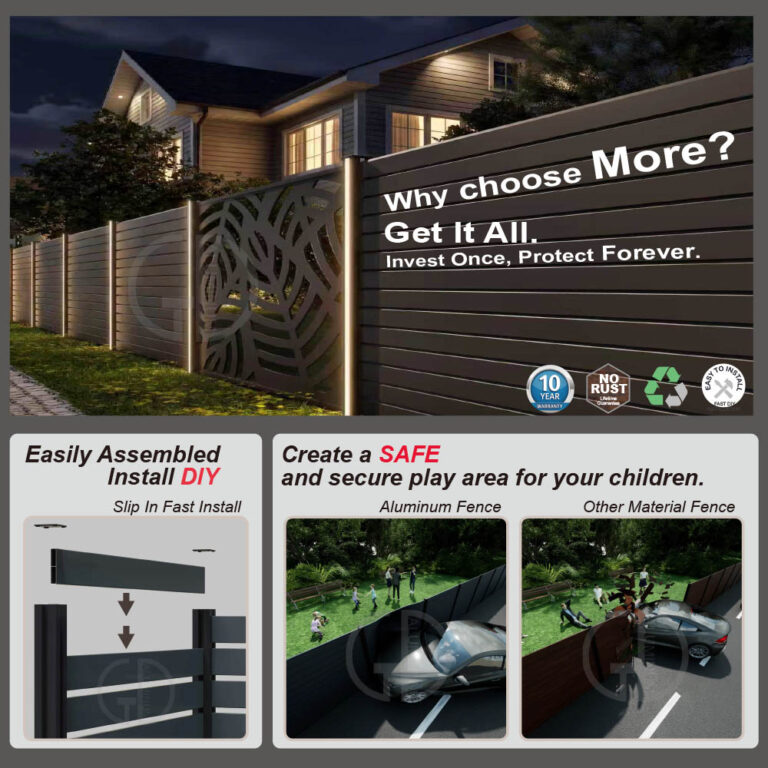
Aluminum fencing changes that math: कोई पुताई नहीं, no rust treatment, and no rot. The only recurring task in heavy salt zones is an occasional rinse to clear accumulated salt spray.
When we help clients compare 10-year totals, coated aluminum systems usually win even when the upfront price is higher. The maintenance line simply does not recur.
Budgeting tip: put the coating warranty in the contract before installation. A written 10-year warranty covers fade and structural defects, while a verbal promise covers nothing once the fence is on site.
When Should You Work With an OEM/ODM Supplier for Coastal Projects?
Coastal projects rarely fit a catalog. Plot shapes, wind requirements, height limits, and color schedules vary from one site to the next.
We build fences, द्वार, and railings as full custom systems. That means OEM/ODM from design drawing to finished installation guidance, including export documentation for distributors.
If you are a contractor standardizing a coastal product line, or a distributor buying private label, OEM/ODM lets you lock the specification once. Repeat it across projects without re-engineering.
Before sending drawings, ask about minimum order quantities, sample policy, and certificate support for export. Those three answers decide whether a supplier can actually serve a coastal project pipeline.
हमारा custom aluminum manufacturing page walks through the process and lead times. It also covers sampling and which certificates we provide for export.
आपूर्तिकर्ता ऑडिट चेकलिस्ट: 5 Documents to Request Before Ordering Coastal Fencing
Before you place an order, request these five documents from any supplier. They turn a coastal promise into a verifiable specification.
1. मिल परीक्षण प्रमाणपत्र for the 6063-T6 extrusion batch. It verifies the alloy and temper, not just the name on the brochure.
2. Salt spray test report (आईएसओ 9227 NSS) बताए गए घंटों के साथ. 2,000 hours is the architectural benchmark we design to.
3. Coating specification confirming AAMA 2604 या ए.ए.एम.ए 2605 compliance and the film thickness in writing. Request the thickness in microns, because heavier film drives longer service in salt air.
4. Third-party wind load certificate covering the exact panel and post model, such as an Intertek 510 N/m² report. Confirm the report matches the model you are ordering.
5. Written warranty statement stating what is covered (कोटिंग फीका पड़ना, structure, workmanship) and for how long. Our coating warranty runs 10 साल, backed by salt spray test data.
अक्सर पूछे जाने वाले प्रश्नों
Which coastal area fencing materials resist salt air best?
Aluminum with architectural-grade powder coating is the strongest option for salt air. 6063-T6 alloy forms a protective oxide layer, and a coating validated by 2,000 hours of neutral salt spray testing per ISO 9227 protects the surface finish. Ask for the mill test certificate and the salt spray report with the hours stated, and compare suppliers like for like.
How often does a coastal aluminum fence need maintenance?
No repainting, धुंधला हो जाना, or rust treatment is required. In heavy salt zones we recommend an occasional rinse to clear accumulated salt spray; the coating carries a 10-year warranty backed by salt spray test data.
Is galvanized steel fencing acceptable near the ocean?
Only with a disciplined maintenance budget. Steel rusts first at welds and cut edges where the zinc layer is broken, so coastal galvanized fences typically need coating touch-ups every 2-4 साल. Get the touch-up cost in writing before you commit.
Can coastal fencing be supplied in custom sizes and colors?
हाँ. We supply fences, द्वार, and railings through OEM/ODM with custom lengths, ऊंचाइयों, and color schedules, from design drawing to finished installation guidance. Lock the specification once and repeat it across projects.