Tipos de cercas de alumínio: 6 Categorias práticas e como escolher
Tipos de cercas de alumínio: 6 Categorias práticas e como escolher
Se você estiver adquirindo cercas para um projeto, você provavelmente já percebeu isso tipos de cercas de alumínio nem sempre são rotulados de forma consistente. Um fornecedor chama isso de cerca de estacas. Outro lista o mesmo produto como estilo ornamental. A confusão custa dinheiro de verdade.
Escolha o tipo errado de cerca de alumínio e você poderá enfrentar violações do código, retrabalho de instalação, ou corrosão prematura. Em nosso 7+ anos de fabricação de sistemas de cercas de alumínio para a América do Norte e Europa, vimos todas as categorias de cercas funcionarem e falharem em condições do mundo real.
Este guia percorre seis categorias práticas de cercas de alumínio, para que serve cada um, e como combinar o tipo certo para o seu projeto. Abordaremos a estrutura, aplicativo, instalação, terminar, e liga–para que você possa especificar com confiança.
Índice
- 1. Por estrutura: Piquete, Painel, e cercas com venezianas
- 2. Por aplicativo: Piscina, Jardim, Comercial, e Segurança
- 3. Por instalação: No solo, Montado na superfície, e sem escavação
- 4. Por acabamento superficial: Revestimento em Pó, Anodizado, e grão de madeira
- 5. Por grau de liga: 6063-T5 versus. 6063-T6
- 6. Como escolher o tipo de cerca certo para o seu projeto
- Perguntas frequentes
1. Tipos de cercas de alumínio por estrutura: Piquete, Painel, e veneziana
O perfil estrutural é a primeira decisão que a maioria dos compradores toma, e determina tudo, desde o custo por pé até o nível de privacidade e a resistência ao vento. Os estilos de cercas de alumínio se enquadram em três categorias estruturais primárias.
Piquete (Ornamental) Cercas
Cercas de estacas–também chamadas de cercas ornamentais de alumínio–apresentam estacas verticais espaçadas uniformemente entre trilhos horizontais. Este é o estilo mais comum tanto em projetos residenciais quanto comerciais leves.
É responsável por aproximadamente 60% de nossas remessas para a América do Norte. O design aberto permite a passagem de ar e luz enquanto ainda define os limites da propriedade.
Cercas de estacas típicas vêm em 2 trilhos, 3-trilho, e configurações de 4 trilhos. Mais trilhos significam maior rigidez e uma aparência mais substancial. Isso é importante para propriedades comerciais ou instalações em zonas com muito vento.
Recomendamos pelo menos uma especificação de 3 trilhos para qualquer coisa acima 4 pés de altura. Entre todos os diferentes tipos de cercas de alumínio, estilos de piquete oferecem o melhor equilíbrio de custo, visibilidade, e fluxo de ar.
Cercas de painel de privacidade
As cercas de painel de privacidade usam ripas de largura total ou painéis sólidos que bloqueiam a visibilidade externa. Eles são populares para pátios de quintal, áreas de estar ao ar livre do restaurante, e cercas de pátio de armazenamento.
Entre todos os tipos de cercas de alumínio, estilos de painel oferecem a maior redução de ruído e proteção visual. A compensação é a carga do vento. Um painel sólido capta muito mais vento do que um design de estaca aberta.
Isso significa que o tamanho do poste e a profundidade da fundação precisam ser aumentados de acordo. Nossos sistemas de cercas de privacidade são testados pela Intertek para resistir 510 N/m²–aproximadamente 106 km/h–da pressão do vento.
Isso cobre a maior parte do código 3 zonas de furacão. Se você estiver comparando opções de cercas de metal para uma área com muito vento, peça ao fornecedor um relatório de teste de carga de vento antes de se comprometer.
Cercas com venezianas
As cercas com venezianas apresentam ripas angulares que permitem o fluxo de ar enquanto bloqueiam a linha de visão direta. Eles encontram um meio termo entre os estilos de piquete e painel.
Você obtém privacidade parcial sem a penalidade total de carga de vento de uma cerca sólida. Os estilos com venezianas são especialmente comuns em projetos costeiros onde a ventilação do ar salgado é importante.
2. Tipos de cercas de alumínio por aplicação: Piscina, Jardim, Comercial, e Segurança
Outra forma de categorizar os tipos de cercas de alumínio é pelo uso pretendido. As cercas específicas da aplicação são projetadas para atender a requisitos específicos de códigos ou padrões de desempenho.
Cercas de piscina
Cercas de piscina são a categoria mais regulamentada. Nos EUA, o Código Internacional de Piscinas e Spas da ICC exige uma altura mínima de 48 polegadas, espaçamento máximo de estacas de 4 polegadas, e portões com travamento automático e fechamento automático.
Na Europa, EM 16582 estabelece padrões semelhantes. Porque os ambientes da piscina são úmidos e muitas vezes tratados com cloro, a resistência à corrosão não é negociável.
Todos os nossos postes e painéis de cerca de alumínio para piscina usam 80-100 revestimento em pó μm–AMAMA 2604 equivalente–e passaram pela ISO 9227 teste de névoa salina. Se você estiver avaliando tipos de cercas de alumínio para um projeto de piscina, certifique-se de que o fornecedor possa lhe mostrar um relatório atual de névoa salina.
Jardim / Cercas Ornamentais
Cercas de jardim e ornamentais priorizam a aparência em detrimento do desempenho extremo. Eles são normalmente 3-4 pés de altura, disponível em estilos decorativos como topo de lança ou topo plano.
Eles são usados para paisagismo de jardim frontal, limites do parque, e marcadores decorativos de propriedades. Enquanto decorativo, eles ainda precisam de integridade estrutural.
Um erro comum que vemos é que os compradores escolhem a cerca ornamental de menor espessura para economizar dinheiro. Muitas vezes dobra após uma única temporada de tempestades.
Para qualquer cerca que permaneça instalada o ano todo, recomendamos uma parede de estacas mínima de 1,2 mm e uma parede de trilho de 1,8 mm. Esta é uma das diferenças mais negligenciadas entre os tipos de sistemas de cerca de alumínio econômicos e premium.
Cercas Comerciais e Industriais
As cercas de alumínio de nível comercial são construídas para maior tráfego e maior vida útil. Eles apresentam medidores de parede mais grossos, conexões reforçadas entre trilhos e postes, e muitas vezes recursos anti-escalada.
As aplicações típicas incluem perímetros de armazém, terreno da escola, e parques industriais. O custo extra de material é rapidamente compensado por taxas mais baixas de substituição e reparo ao longo da cerca. 20+ vida útil do ano.
Segurança / Cercas anti-escalada
As cercas de segurança são a extremidade resistente do espectro–mais alto (6-10 pés), com espaçamento de estacas muito estreito ou preenchimento de malha soldada que impede a escalada.
Eles são usados para data centers, subestações de serviços públicos, instalações correcionais, e locais logísticos de alto valor. Estes são os tipos de cercas de alumínio mais especializados e geralmente exigem aprovação de engenharia.
3. Tipos de instalação de cerca de alumínio: No solo, Montado na superfície, e sem escavação
O método de instalação determina não apenas como a cerca entra, mas também como funciona a longo prazo. Os tipos de cercas de alumínio são frequentemente vendidos por estilo de montagem, e escolher o errado para a condição do seu terreno é uma das principais causas de falha da cerca.
No solo (Posto enterrado) Cercas
A instalação no solo é o método tradicional e estruturalmente mais sólido. As postagens estão definidas 24-36 centímetros no chão e ancorados com concreto.
Este é o padrão para instalações permanentes, especialmente em áreas com vento forte ou muita neve. Para terreno inclinado, postes enterrados padrão exigem corte no local.
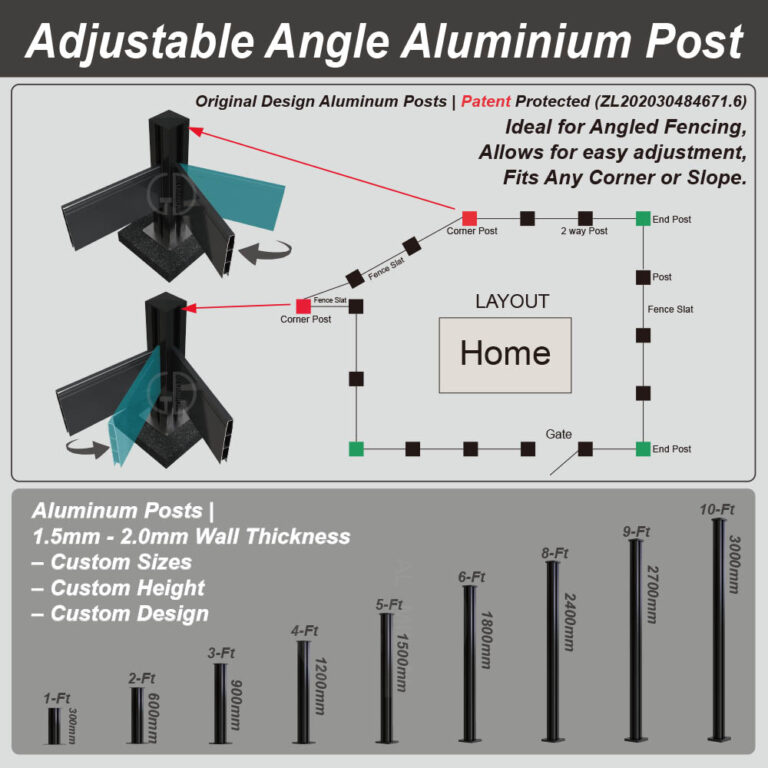
Isso adiciona mão de obra e pode anular a garantia de acabamento. Nossa solução é um design patenteado de poste giratório de 0 a 90° que elimina cortes no local e reduz o trabalho de instalação em cerca de 30% em comparação com postes de ângulo fixo padrão.
Se você estiver comparando tipos de cercas de alumínio para uma encosta ou propriedade nivelada, certifique-se de perguntar sobre o sistema de pós-ajuste. Isso economizará um tempo significativo no local.
Cercas montadas na superfície
Cercas montadas em superfície são aparafusadas diretamente a uma laje ou deck de concreto existente usando uma placa de base. Este é o método ideal para decks de telhado, piscina rodeia em almofadas de concreto, e grades de varanda.
A questão principal é se o substrato pode suportar o momento de carga a partir da altura da cerca. Para montagens em superfície, recomendamos sempre especificar uma placa de base com pelo menos 4 pontos de ancoragem.
Verifique também a espessura da laje. Qualquer coisa com menos de 100 mm de concreto armado pode não fornecer poder de retenção adequado para uma cerca de 4 pés ou mais alta.
Cercas sem escavação
As cercas de alumínio que não podem ser escavadas usam estacas no solo ou sistemas de ancoragem que não requerem concreto ou escavação. Eles são mais rápidos de instalar e populares para instalações temporárias, locatários, ou locais onde a escavação é proibida.
A compensação: sistemas sem escavação geralmente têm menor capacidade de carga eólica. Eles não são recomendados para cercas 4 pés de altura ou em regiões com ventos sustentados acima 80 km/h.
Eles também não são adequados para solos macios ou arenosos sem estabilização adicional. Entre todos os tipos de cercas de alumínio, sistemas sem escavação têm o caso de uso mais restrito.
4. Tipos de acabamentos para cercas de alumínio: Revestimento em Pó, Anodizado, e grão de madeira
O acabamento é o que protege o alumínio da corrosão e determina a aparência da cerca. Ao comparar tipos de materiais para cercas de alumínio, não negligencie o sistema de revestimento.
É responsável por uma parte surpreendente do custo total e é o fator número um para determinar o comprimento da cerca..
Cercas revestidas a pó (Mais Comum)
O revestimento em pó de poliéster é o padrão da indústria para cercas de alumínio. É aplicado eletrostaticamente e curado em forno, criando um difícil, acabamento durável.
Resiste a lascas, desvanecimento, e corrosão. A qualidade varia enormemente de acordo com o fornecedor, no entanto.
As barreiras orçamentárias podem ter um 40-50 revestimento μm que desbota ou desbota 3-5 anos. Nosso padrão é 80-100 μm usando pós das marcas AkzoNobel e Tiger, com garantia de acabamento de 25 anos.
Mantemos nossa própria linha de pintura a pó com 200+ Cores RAL, para que a consistência das cores entre lotes seja controlada internamente. Isso é mais importante quando você solicita várias remessas em fases de um grande desenvolvimento.
Cercas anodizadas
A anodização é um processo eletroquímico que engrossa a camada de óxido natural do alumínio. Cria um metal, aparência de metal escovado que é popular na arquitetura moderna e minimalista.
Os acabamentos anodizados são extremamente duros e resistentes a riscos. Mas eles oferecem menos opções de cores–principalmente prata, bronze, e preto–e são normalmente mais caros que o revestimento em pó.
Cercas de grãos de madeira
Cercas de alumínio com grão de madeira usam um processo de sublimação para transferir um acabamento com padrão de madeira para a superfície com revestimento em pó. Eles dão a você a aparência de madeira sem manutenção.
Sem coloração, sem apodrecer, nenhum dano de cupim. Os acabamentos com veios de madeira estão ganhando popularidade em projetos residenciais e hoteleiros, especialmente para painéis de privacidade e sistemas de grades de convés.
A diferença de qualidade se resume ao quão realista é o padrão de grão e se o revestimento é aplicado uniformemente em todos os lados da extrusão. Produtos de madeira mais baratos geralmente apresentam o padrão apenas na face visível.
5. Tipos de grades de cerca de alumínio: 6063-T5 versus. 6063-T6
Quase todas as cercas de alumínio são feitas de alumínio da série 6063, escolhido por sua boa extrusabilidade, resistência à corrosão, e força moderada. Mas dentro do 6063 família, há dois temperamentos que você verá especificados.
A diferença é mais importante do que muitos compradores imaginam.
6063-T5: A opção padrão
A têmpera T5 é resfriada a ar após a extrusão e envelhecida artificialmente. Tem uma resistência à tração ao redor 185 MPa–27,000 psi–e é perfeitamente adequado para a maioria das cercas residenciais.
Também funciona bem para cercas decorativas de baixa altura e aplicações não críticas. A maioria dos fornecedores de cercas econômicas usa exclusivamente T5.
6063-T6: A opção premium
A têmpera T6 é tratada termicamente em solução e envelhecida artificialmente, dando-lhe uma resistência à tração de aproximadamente 310 MPa–24,000 psi. Isso é sobre 68% mais forte que T5.
Para o mesmo formato de perfil, T6 pode suportar cargas de vento mais altas, intervalos mais longos entre postagens, e mais resistência ao impacto. Usamos 6063-T6 como liga padrão porque a diferença de custo é pequena em relação ao ganho de desempenho.
Isso nos dá resultados mais consistentes em diferentes tipos de projetos. Para referência, ASTM B221 estabelece os padrões oficiais de propriedade química e mecânica para 6063 extrusões de alumínio usadas em produtos de construção.
6. Como escolher o tipo certo de cerca de alumínio para o seu projeto
Com tantos tipos de cercas de alumínio disponíveis, o processo de seleção pode parecer opressor. Aqui está uma estrutura de cinco etapas que usamos com nossos clientes atacadistas e de projetos para restringi-la rapidamente.
- Comece com o requisito do código. Cercas de piscina, propriedades comerciais, e os espaços públicos quase sempre têm um código de construção local que determina a altura, espaçamento de piquete, e classificações de carga. Obtenha isso primeiro–todo o resto é secundário.
- Combine a estrutura com o ambiente. Vento forte? Escolha estacas abertas ou persianas em vez de painel sólido. Localização costeira? Verifique a espessura do revestimento e a classificação de névoa salina–não apenas “grau marinho” linguagem de marketing.
- Escolha o estilo de montagem para sua condição de solo. Laje de concreto significa montagem em superfície. Solo significa enterrado. Zona temporária ou sem escavação significa sistema de espigões. Nas encostas, procure um poste ajustável ou giratório para evitar cortes personalizados.
- Especifique a liga e o acabamento. Para qualquer coisa acima 4 pés de altura ou em uma zona de vento acima 90 km/h, especifique 6063-T6. Para finalizar, quase sempre recomendamos revestimento em pó de 80μm+ como o melhor equilíbrio de custo, durabilidade, e opções de cores.
- Valide o fornecedor. Peça relatórios de teste, não apenas reivindicações. Você deseja ver testes da Intertek ou similares de carga de vento, ISO 9227 resultados de névoa salina, e certificações relevantes como CE ou UKCA. Nosso avaliação de fabricante de cerca de alumínio guia pode ajudá-lo a selecionar candidatos.
Se você ainda não tem certeza de qual tipo de cerca de alumínio se adapta ao seu projeto, envie-nos a planta do seu site ou folha de especificações. Nossa equipe de engenharia recomendará o sistema certo–sem discurso de vendas, apenas uma recomendação direta com base no que nós mesmos instalaríamos.
Consulte o Padrão ASTM B221 para especificações atuais de extrusão de alumínio usadas em sistemas de cercas.
Perguntas frequentes sobre tipos de cercas de alumínio
Piquete (ornamental) cercas de alumínio são o estilo mais popular, compensando aproximadamente 60% de instalações residenciais e comerciais leves. Eles são acessíveis, baixa manutenção, e versátil o suficiente para tudo, desde limites de pátios até cercas de piscinas. Na GD Alumínio, nossa cerca de estacas de 3 trilhos com revestimento em pó preto é consistentemente nossa linha mais vendida entre todos os tipos de cercas de alumínio que fabricamos.
Para projetos costeiros, procure cercas de alumínio com revestimento em pó resistente (80-100μm mínimo) que passou pela ISO 9227 teste de névoa salina. Evite acabamentos anodizados baratos, que pode formar giz em ambientes com ar salgado. Todos os nossos sistemas costeiros usam pós AkzoNobel ou Tiger e possuem garantia de acabamento de 25 anos contra corrosão e desbotamento excessivo.
Sim, mas o método de instalação é importante. Postes de ângulo fixo padrão exigem corte no local, o que acrescenta trabalho e pode danificar o revestimento protetor. Uma solução melhor é um sistema de poste giratório–como nosso design ajustável patenteado de 0-90°–que se adapta à inclinação sem cortar. Isto pode reduzir o trabalho no local em cerca de 30% e preserva a garantia total do acabamento. Saiba mais sobre postes de cerca de alumínio e opções de montagem.
Uma cerca de alumínio bem construída com revestimento em pó de qualidade durará 20-25 anos ou mais com manutenção mínima. Isso é aproximadamente 2-3 vezes mais longo do que uma cerca de madeira típica, que pode precisar de substituição em 8-12 anos, e comparável ou melhor do que cercas de vinil, que pode se tornar quebradiço devido à exposição aos raios UV. A natureza não enferrujada do alumínio é a principal vantagem sobre o aço ou o ferro forjado, especialmente em climas úmidos ou costeiros.
Esteja você comparando opções de cercas metálicas para um único projeto residencial ou adquirindo um contêiner de painéis de cerca para um empreendimento, a chave é combinar o tipo de cerca com as condições reais que ela enfrentará. Não apenas escolher a opção mais barata de um catálogo.
Compreender os diferentes tipos de cercas de alumínio–por estrutura, aplicativo, instalação, terminar, e liga–irá ajudá-lo a tomar uma decisão confiante e duradoura. Se você tem um projeto específico em mente e deseja uma segunda opinião sobre qual tipo de cerca de alumínio faz mais sentido, entre em contato e nós explicaremos isso com você.